01 The Price of Online Dating
Yan Li (pseudonym) is a tall young man with thick eyebrows and big eyes. His parents are both intellectuals. He grew up in a traditional family and had never been in a relationship before going to university, but he has always been curious about sex.
After starting university, Yan Li met a woman through a dating app. They got along very well and arranged to meet in person. They ate, went shopping, and watched movies together. Yan Li assumed they were dating and treated her as his girlfriend, and naturally, they had sex.

During sexual intercourse, his "girlfriend" would always remove the condom herself, saying it was a sign of mutual trust . Yan Li initially agreed, but after telling his roommate, he felt something was amiss and researched HIV/AIDS. He then went to a hospital near the school for a test, and the result was a positive HIV diagnosis…
02 The Bitter Fruit of “Rebellion”
The Luzhou Center for Disease Control and Prevention once released a case. Xiaoya (pseudonym), a 17-year-old high school student, was spoiled by her parents as the youngest daughter in the family, but she did not have a good relationship with them. She felt that her parents were old and there was a generation gap between them, so they could not understand her. Therefore, she became good friends with Xiaoli, who was about the same age.
Entering puberty, Xiaoya became rebellious and opinionated. She and Xiaoli made many friends outside of school and often stayed out all night. Within a year, Xiaoya had romantic relationships with five men and had physical contact with four of them.
Later, due to a persistent cold, Xiaoya was diagnosed with HIV.

I. The incidence of HIV/AIDS among Chinese children and adolescents has increased fivefold.
A report published by the Chinese Center for Disease Control and Prevention shows that between 2010 and 2019, more than 140,000 cases of HIV/AIDS were reported among adolescents aged 15-24 in mainland China. The number of confirmed cases showed an overall upward trend over the decade, with an average annual increase of 6% .
Among the reported cases, the proportion of students increased from 8.5% in 2010 to 21.7% in 2019. In terms of geographical distribution, Sichuan Province had the highest number of new patients over the past decade, while the proportion of cases in East China and Central China also increased.
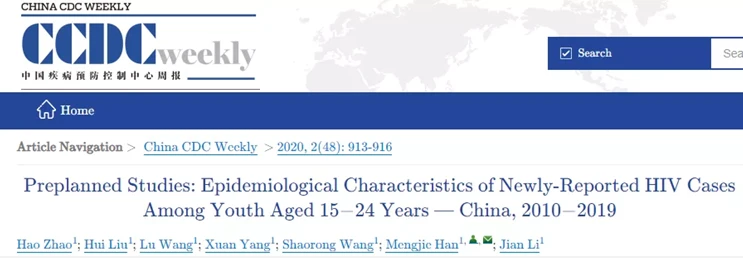
An epidemiological study by the Beijing School of Public Health, published in the British Medical Journal, reported that between 2008 and 2017, the leading cause of death from infectious diseases among children and adolescents shifted from rabies and tuberculosis to HIV/AIDS . In particular, between 2011 and 2017, the incidence of HIV/AIDS among adolescents increased fivefold .
HIV/AIDS prevention and control among children and adolescents has become a top priority.
II. Why are teenagers the "main force" driving the increase in HIV/AIDS cases?
What exactly caused teenagers, who should be growing up healthily, to become the " main force " in the increase of AIDS?
Some students, lacking self-control, are unable to distinguish between enticement and deception, engaging in unsafe sexual behavior and thus contracting HIV. However, a more significant reason is the increasingly open sexual attitudes of the younger generation, coupled with inadequate sex education . Many teenagers have only a superficial understanding of sexually transmitted diseases, including HIV, and do not proactively take safe sex practices.

To prevent children from contracting HIV, it's essential to let them know these things :
Learn about sexual health
Adolescents who are sexually active should be more proactive in understanding the risks of HIV infection that may arise from engaging in unsafe sexual behavior, as this is crucial to preventing the spread of the virus.
Refuse dangerous behavior
Maintaining a stable partner and avoiding frequent changes, and using condoms correctly and consistently during sexual intercourse, are among the most effective measures for preventing HIV/AIDS.
Stay away from drugs
Injecting drugs increases the risk of HIV infection through the bloodstream. Many HIV viruses are transmitted through needles shared by drug users. Therefore, it is essential to stay away from drugs and never trust medications from strangers.

Use the "undo" for HIV within 72 hours.
If you engage in high-risk unsafe sexual behavior, be sure to seek help proactively. Contact your local disease control center or hospital and take preventative medication under the guidance of a doctor. This can effectively reduce the risk of infection.
III. These people need to be tested for HIV.
For certain high-risk groups, it is recommended to proactively get tested for HIV, including:
• People with " promiscuous " sexual activity . Unprotected sex is the main route of HIV transmission. If you have multiple sexual partners and frequent sexual activity, you should get tested for HIV antibodies regularly.
Women planning to become pregnant . Mother-to-child transmission is also a way HIV can be transmitted. Early testing and taking preventative medication can prevent the virus from being transmitted to the baby.
• Men who have sex with men . Because the sexual practices of men who have sex with men carry a higher risk of HIV exposure, it is best for them to get tested for HIV regularly if they do not have a regular partner.

• Drug users . Whether they use drugs by touch or inject them, they are at high risk of HIV infection. In addition to regular testing, they should avoid sharing needles with others. Of course, quitting drugs as early as possible is the best course of action.
4. "If I have AIDS, am I going to die soon?"
Some patients feel like it's the end of the world when they test positive for HIV, thinking they won't live much longer. There's no need to worry excessively . If you take your medication properly and get regular checkups, HIV is a chronic disease.
A recent important study published in a sub-journal of the Journal of the American Medical Association (JAMA) has shown, through a 16-year follow-up study, that the life expectancy of people living with HIV is becoming increasingly similar to that of the general population. A young person infected with HIV at age 21, if treated properly, has a life expectancy approximately 6.8 years shorter than that of an uninfected person of the same age.
With the rapid advancements in medicine, humanity is no longer helpless against AIDS. Early testing and treatment offer hope of keeping the viral load at a minimum. Therefore, if you discover you are infected with HIV, do not panic; seek proper medical treatment at a hospital as soon as possible.
Many people feel that AIDS is far removed from their lives, but this is not the case. The vast majority of AIDS transmissions occur unintentionally. Therefore, the general public, especially young people, should raise their awareness of AIDS prevention and avoid unsafe sexual practices.
References:
The Chinese Center for Disease Control and Prevention (CDC) is concerned about the continuous increase in HIV/AIDS cases among Chinese adolescents over the past decade. (Medical Perspective, 2020-12-03)
Reproduction without the author's permission is prohibited.