Author: Pu Xiaowen, Shanghai First Maternity and Infant Hospital
Source|Medical World Obstetrics and Gynecology Channel
There was a time when small advertisements were plastered all over the streets and alleys, and even on telephone poles. These advertisements always featured eye-catching words like "cervical erosion" and "pelvic effusion," claiming that not treating them could lead to serious consequences such as infertility and miscarriage.
Is that really the case? We invited Dr. Pu Xiaowen from Shanghai First Maternity and Infant Hospital to talk to us about these "gynecological diseases" that are frequently featured in advertisements.
1
Is cervical erosion really not a disease?
The term "cervical erosion" is an incorrect description of "cervical columnar epithelial ectopia." In the seventh edition of the Obstetrics and Gynecology textbook in 2008, the name "cervical erosion" has been replaced by "cervical columnar epithelial ectopia."
"Then why is there a term like 'erosion'?"
Under normal physiological conditions, the cervix contains two different types of cells: squamous epithelium and columnar epithelium. During a gynecological examination, the area covered by squamous epithelium on the outer side appears "smooth," but the area covered by columnar epithelium on the inner side of the cervical canal looks congested. In the past, the area covered by congested columnar epithelium was called "erosion."
“
So it's not really erosion; it's just that the columnar epithelium inside the cervical canal extends outward under the influence of estrogen. Many young women experience physiological outward migration of the cervical columnar epithelium.
During a gynecological examination, doctors cannot visually identify columnar epithelial abnormalities such as inflammation, congestion, precancerous lesions of the cervix, or even early cervical cancer. These abnormalities often appear red and resemble "erosion."
Currently, there isn't a more precise or suitable description for the state of the cervix seen during a gynecological examination. Therefore, although it's an outdated concept, some doctors still use it during gynecological exams. This "erosion" is merely a morphological description and doesn't necessarily indicate the presence of disease. This is why cervical cancer screening is included in routine gynecological examinations.
If abnormalities are found in cervical cancer screening or HPV testing during a routine gynecological examination, it is necessary to go to a regular specialist hospital for further examination to prevent delays in diagnosis and treatment.
2
Pelvic effusion = pelvic inflammatory disease ?
When women undergo gynecological ultrasounds, they often see the description "pelvic effusion," which causes many patients to panic. Does pelvic effusion mean they have pelvic inflammatory disease? Actually, no.
From an anatomical perspective, the posterior fornix is the lowest point of the pelvic and abdominal cavities. Fluid is most likely to accumulate here when there is pelvic effusion, and it is easily detected by ultrasound.
Pelvic effusion is not the same as pelvic inflammatory disease. Fever can be divided into two types: physiological and pathological.
Physiological effusion is most commonly seen in two periods:
1. Ovulation period: A small amount of blood and follicular fluid are discharged from the ruptured ovary, and a small amount of fluid accumulates in the posterior fornix.
2. At the end of menstruation, some women experience retrograde menstrual flow. When the amount of menstrual blood in the uterine cavity is relatively large, it may flow back into the pelvic cavity along the fallopian tubes. This happens in about 95% of women.
These two types of pelvic effusion are often asymptomatic, or may cause mild abdominal bloating or a feeling of heaviness, so there's no need to panic. They will resolve naturally without treatment.
The following are common types of pathological effusion:
1. Pelvic Inflammatory Disease: Acute pelvic inflammatory disease is the most common cause, often accompanied by symptoms such as abdominal pain, fever, and lower back pain. Common predisposing factors include: pelvic infection after abortion, IUD insertion or removal, sexual activity during menstruation, and postpartum weakened immunity.
2. Pelvic endometriosis: Ectopic lesions cause peritonitis and fluid exudation. Common symptoms include dysmenorrhea, dyspareunia, and tenderness or nodules of the sacral ligament during gynecological examination.
3. Pelvic tumors: Ovarian or fallopian tube tumors can cause pelvic effusion, often without symptoms, but sometimes accompanied by fatigue, weight loss, abdominal distension, etc. Be alert to the possibility of malignancy.
4. Overstimulation of the ovaries during ovulation induction can also cause pelvic fluid accumulation.
▼
Most cases of pelvic effusion seen clinically are in women
It is physiological fluid accumulation.
Therefore, there is no need to be afraid of seeing pelvic effusion.
You can ask your doctor for more information.
Avoid overtreatment.
3
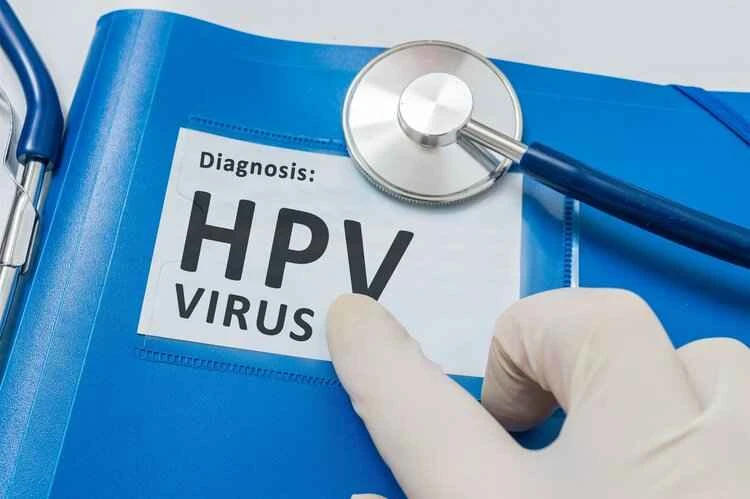
Does HPV positive equal cervical cancer?
HPV is the abbreviation for Human Papillomavirus. Current research has found hundreds of different types of HPV. The types that are closely related to human malignant tumors are called high-risk HPV. High-risk HPV includes the following types: 16, 18, 31, 33, 35, 39, 45, 51, 52, 56, 58, 59, and 68.
Numerous studies have shown a close relationship between high-risk HPV and cervical cancer, therefore high-risk HPV testing is now used as a means of early screening for cervical cancer.
Many people panic when they test positive for HPV.
I'm worried I'll get cervical cancer!
Is that really the case?
The answer is, of course, "NO, NO, NO".
A positive HPV test does not mean you have the disease. It's important to know that many men and women may be infected with HPV at some point in their lives. The body's normal immune system is fully capable of recognizing and clearing HPV. Young women with positive HPV test results often clear the virus through their own immunity within 6 to 18 months, resulting in a negative HPV test. A positive HPV test only indicates an HPV infection; it is a long way from actually developing cervical cancer.
Therefore, we should not panic excessively about HPV.
But we must not underestimate our opponent!
When a physical examination reveals a positive HPV result, you will need to undergo a cervical cytology test (TCT). If the TCT result is also abnormal, the doctor will recommend a colposcopy.
Tips
The purpose of colposcopy is to comprehensively assess whether there are any lesions in the cervix, vagina, and other areas, and to perform a biopsy on any abnormal areas (taking a tiny, rice-grain-sized tissue sample) to obtain a pathological diagnosis. The pathological result is the evidence for determining the treatment plan. If a detailed colposcopy does not find any abnormalities, we will consider that the HPV positive result simply indicates a carrier state. In this case, you only need to follow the doctor's advice and closely monitor the situation; it's similar to carrying a cold virus, so there's no need to be anxious.
Some women of childbearing age worry about whether a positive HPV test will affect their ability to conceive. If you test positive for HPV, you should visit a reputable hospital's gynecology department for an examination to determine if a lesion is actually present. If you are planning to become pregnant, it is recommended that you explain your concerns to your specialist, who will assess the feasibility of pregnancy based on the test results. Of course, it's also important to follow your doctor's instructions for regular follow-up appointments during pregnancy!
Furthermore, even if you test positive for HPV, you can still receive the HPV vaccine. If you have already been infected with HPV, you can still prevent infection with other genotypes by getting vaccinated. Of course, even after vaccination, regular cervical cancer screening is still necessary.
After reading this, do you have a better understanding now?
Next time you encounter someone trying to scam you using those pretexts,
A firm no!
Expert introduction
Pu Xiaowen, Attending Physician, graduated from the seven-year clinical medicine program at Shanghai Jiao Tong University School of Medicine with a Master's degree, specializing in the diagnosis and treatment of cervical diseases and ovarian tumors. She has over 10 years of clinical experience in obstetrics and gynecology and cervical surgery, possessing rich clinical practice experience. She is particularly skilled in the diagnosis and treatment of lower gynecological tract infections, cervical disease screening, colposcopy for the diagnosis and treatment of precancerous cervical lesions, and cervical physical therapy. She has published numerous core journal articles both domestically and internationally. She strives to heal every female patient with sincerity, patience, and confidence.
The above content is exclusively authorized for use only and may not be reproduced without the copyright holder's authorization.