"Women are naturally dramatic!"
Why are girls always so moody?
"What are women really thinking? Actually, even the girls themselves don't know..."
Are the girls around you like this too? One second they're all peaceful and serene, but the next they might be furious. They're also prone to being overly sensitive, suspicious, and tearful over trivial matters. You might even spot them, who are lively and chatty during the day, posting sad messages on social media late at night: "In the end, I still have to bear everything alone."
Some people simply attribute these things to girls being temperamental, but on this special day for women—International Women's Day—I want to speak up for all my female friends: " Actually, unpredictable mood swings aren't because we're being dramatic! It's because we're affected by our menstrual cycles; we can't control ourselves! "
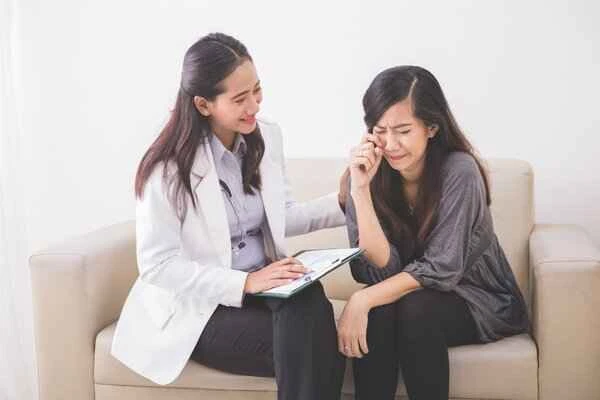
I. The Menstrual Cycle – The Mastermind Behind “Hijacking” Women’s Emotions
First, we need to understand the menstrual cycle. After a woman enters puberty, the endometrium is affected by ovarian hormones, resulting in periodic uterine bleeding. This periodic change of the endometrium, which averages 28 days , is the menstrual cycle.
Just last month, researchers at Stanford University published a study on menstrual cycles and women's emotions in Nature's sub-journal, Nature Human Behaviour. The study analyzed nearly 241 million observations from 3.3 million women in 109 countries.
Studies have found that within the same menstrual cycle, women's moods gradually decrease starting from day 14, reaching their lowest point on the first day of menstruation. Overall, women's moods tend to be negative during their menstrual cycle , and the menstrual cycle has a significant impact on mood. PS: It seems that menstruation is truly a vulnerability for women worldwide!

Second, menstruation is also closely related to female suicide, crime, and mental health issues!
Generally speaking, a woman will have about 450 menstrual periods in her lifetime. During this time, she will lose blood continuously, feel irritable and depressed, and find everything unpleasant. You really can't underestimate the negative impact this thing has on emotions and behavior.
Studies show that the vast majority of violent crimes and suicides involving women occur during the premenstrual period and the 7-8 days of menstruation. Furthermore, female workers experience a significantly higher accident rate at work due to emotional fluctuations during menstruation compared to their non-menstrual periods.
More than half of all emergency accidents involving women occur during menstruation, and female drivers are also more likely to be involved in car accidents during menstruation than at other times . Even more intriguing is the fact that nearly half of all female mental illness patients experience an episode and are admitted to mental hospitals during menstruation . PS: This truly confirms the saying—women are not to be trifled with, and women on their period are even more dangerous!
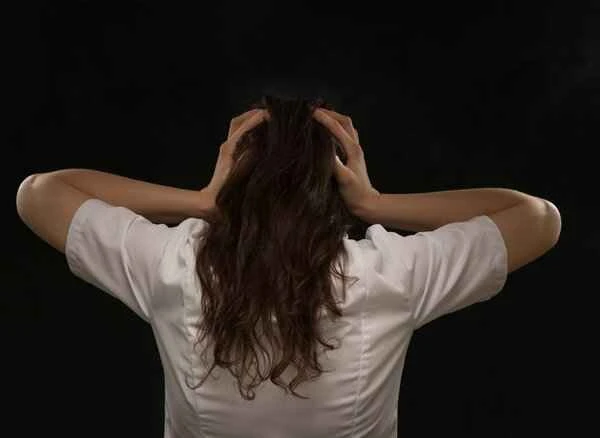
Menstruation has such a significant impact on women's emotions that the medical community has even given this condition a specific term: Premenstrual Syndrome (PMS). Statistics show that 85% of women experience PMS, and 5% of women have particularly severe PMS, which can be upgraded to Premenstrual Irritability.
3. Why do girls become so scary during their menstrual period?
This question has always puzzled people. Hippocrates, the father of Western medicine, explained this behavior as follows: "Menstruation is the release of a woman's anxiety through the blood from the brain and out of the uterus."
1. Fluctuations in hormone levels:
As mentioned above, menstruation occurs when a woman's egg is not fertilized, causing the uterine lining to stop growing, atrophy, and shed, resulting in the discharge of blood and tissue, which forms menstrual blood. This process takes up to a week for the uterus to clean itself completely.
During this period, both estrogen and progesterone levels drop to their lowest point . Estrogen is an important hormone for women, crucial for maintaining libido and promoting sexual development; its importance to women is self-evident. Therefore, when estrogen levels begin to decline, it's like a fish out of water for a woman, often accompanied by mania and anxiety.
2. Menstrual symptoms:
When estrogen levels drop, the limbic system, which controls emotions, immediately detects this. When activated, negative emotions take the lead, and the nerve centers responsible for appetite and sleep, located deep within the limbic system, are also affected .
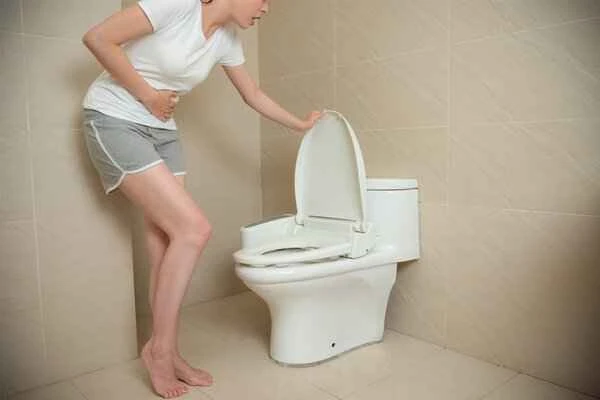
During their periods, girls are like fallen angels, bleeding every day, covered in thick, sticky, and hot sanitary napkins, suffering from sleep deprivation and loss of appetite. Add to that a string of symptoms like headaches, leg pain, back pain, breast tenderness, and heartburn, and it's like adding fuel to the fire . Trying to maintain normal study or work at this time inevitably leads to emotional fluctuations.
3. Self-hypnosis:
More importantly, women during their menstrual period may have already hypnotized themselves. From childhood to adulthood, it is a common understanding that women experience emotional outbursts during menstruation. Many literary and film works also tell women that abdominal pain and bad temper during menstruation are inevitable. Over time, under this cultural influence, they give themselves psychological suggestions , start to brew bad emotions when their period comes, and even consciously or unconsciously amplify these feelings.

Fourth, "Aunt Flo" isn't bad! It's a unique way for us to experience the world.
The menstrual cycle is a physiological rhythm, which, although beyond our control, is precisely what makes a woman's body unique and her sensitivity to the little things in life. "Auntie Menstruation" helps us understand ourselves and also gives us more opportunities to experience the world.
Let's accept premenstrual syndrome; accept the anxiety and sadness of the early morning; accept the weariness of the workday; accept the changing seasons and mood swings; accept the various physical and psychological changes that come with age...
So it's not that we girls are being "dramatic," it's just that we're "held hostage" by our menstrual cycles, and we can't control ourselves. But ladies, we can't use this as an excuse to transform ourselves into "Super Saiyans" during our periods, nor should we panic too much because our menstrual cycles affect our emotions. Learning to understand and accept ourselves is the beginning of healing.
Conclusion
On the occasion of International Women's Day, I wish all women could be free from the emotional influence of their menstrual cycle, learn to control their emotions, leave behind negativity , and approach life with a positive and sunny attitude!
The above content is exclusively authorized for use only and may not be reproduced without the copyright holder's authorization.