How do couples sleep?
Like this?
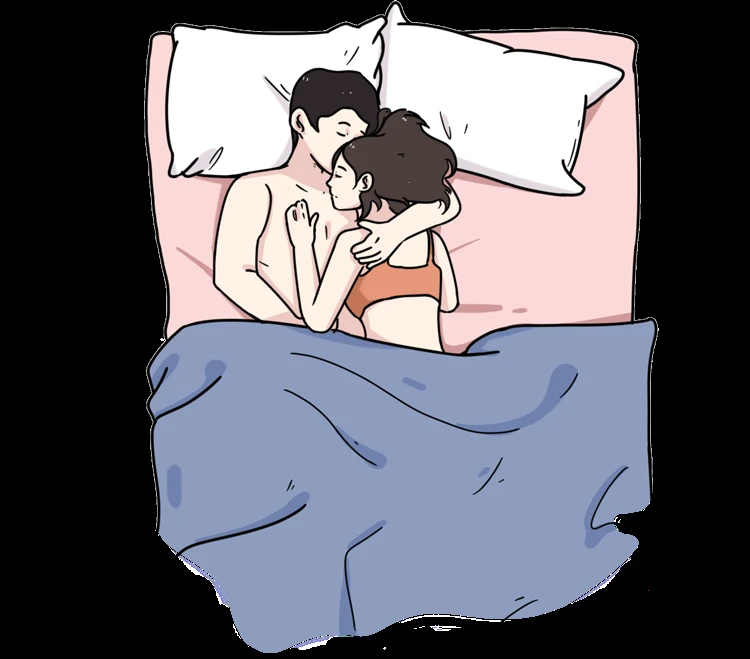
Like this?
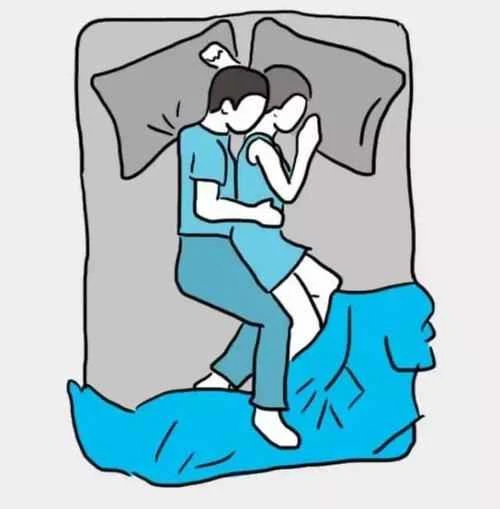
Is it still like this?
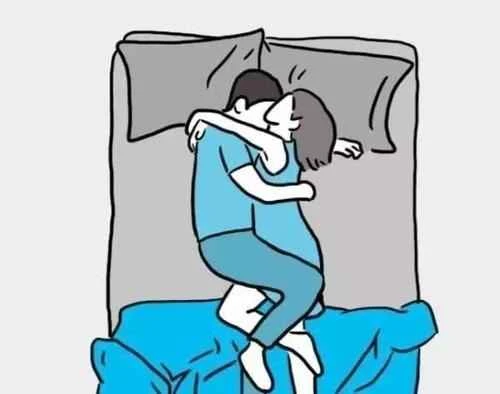
These sleeping positions seem incredibly sweet and romantic, but the cruel truth is that they are not good for your health, especially the first and third ones.
For couples, sleep is a great time to be affectionate, and using their boyfriend's arm as a pillow is often seen by girls as a symbol of their boyfriend's pampering. However, while the girl may sleep comfortably with her head on her boyfriend's arm, the boyfriend may not be, and there could even be hidden dangers.
1. Falling asleep with your head on your boyfriend's arm might kill him.
Having your arm resting on your girlfriend's head for an extended period can not only cause numbness in your hand, but could also be fatal! This is not an exaggeration; incorrect sleeping posture can be a major cause of stroke .
Scientific research has found that patients with arteriosclerosis who sleep on their side will increase the risk of cerebral infarction. In addition, if the arm is under the head while sleeping, the blood flow in the carotid artery slows down and the blood flow to the brain is obstructed, which will affect the oxygen supply to the brain and may even cause the arterial intima to coagulate and form new thrombi, thereby inducing cerebral infarction or recurrent cerebral infarction[1].
Therefore, patients with arteriosclerosis should avoid sleeping on their side and should choose a pillow of appropriate height. Most importantly, they should never put their arm under their head to avoid putting extra strain on the carotid artery. So, for your boyfriend's safety and to ensure your sweet relationship lasts, please stop sleeping with your head on his arm.
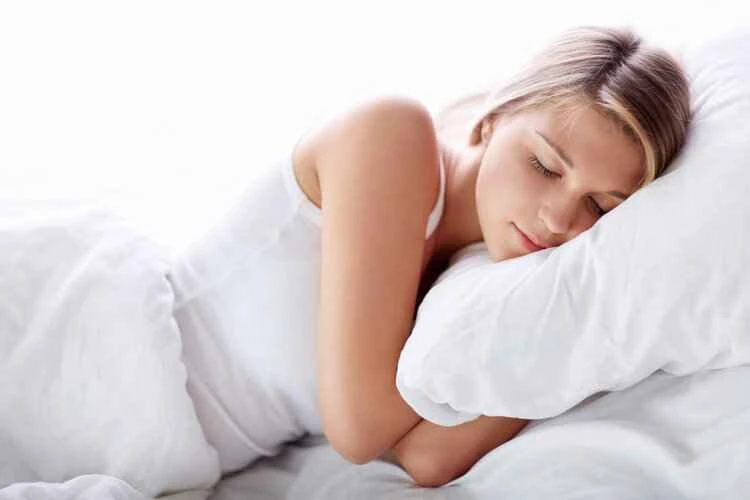
Second, don't assume sleeping is easy; bad sleeping postures can cause three major health problems.
In fact, it's not just patients with arteriosclerosis who need to pay special attention to their sleeping posture; even healthy people can experience health problems if they don't sleep in the right position.
1. Chronic lower back pain
Have you ever experienced lower back pain after waking up? Among patients with chronic lower back pain , one hand is used as a pillow and the other hand is used as a support for the face. One leg is straight and the other leg is raised and bent. This is a comfortable sleeping position that they are used to. Little do they know that it is this sleeping position that causes chronic lower back pain[2]. It turns out that when you are in this sleeping position for a long time, the lumbar spine and spine will be in a rotating state, which will prevent the lower back muscles from relaxing. The pressure between the adjacent annular collagen fibers in the intervertebral disc will also cause the nucleus pulposus to protrude, which will eventually lead to lower back pain.
In addition, sleeping on your stomach can also cause lower back pain. This sleeping position causes the head and neck to be turned to one side for a long time, leading to tension in the neck muscles and thus causing cervical spine problems. Since the muscles of the neck and lower back are closely connected, this can cause varying degrees of lower back pain symptoms.

2. Poor blood circulation
Incorrect sleeping posture can also lead to poor blood circulation and increase the burden on the heart. For patients with cardiovascular and cerebrovascular diseases , it is best not to maintain a left-side lying position for a long time while sleeping[3]. Because the heart is located on the left side, a left-side lying position for a long time can easily compress the heart and affect blood circulation. Therefore, Dr. Chen Xinghua, director of the First Affiliated Hospital of Guangzhou University of Traditional Chinese Medicine, said that patients with cardiovascular diseases should mainly sleep on their right side and occasionally change to a left-side lying position to adjust.
3. Sexual dysfunction
Lying prone is one of the most incorrect sleeping positions because this position causes the body weight to be entirely applied to the chest and abdomen, which not only compresses organs such as the heart and lungs, but also affects the blood circulation of the reproductive organs. Insufficient blood perfusion is also one of the factors that cause impotence[3].
Of course, simply sleeping in a prone position will not directly cause sexual dysfunction, but it is a fact that poor sleeping posture can compress organs. Moreover, because the prone sleeping position requires the head and neck to be turned to one side, it can easily cause neck muscle damage, which may in turn affect performance in sexual activity.
3. What is the correct sleeping posture?
After reading the article above, do you feel like you're sleeping incorrectly no matter how you try? Of course not. Next, I'll tell you what the correct sleeping posture is.
At present, there are two main sleeping positions that are generally recognized as allowing the body to relax more fully: the first is to lie on your side, preferably on your right side, with your knees bent at about 130°. This position can keep the spine on the same horizontal line and allow the muscles to relax more fully. The second sleeping position is to lie on your back. People who are not used to this sleeping position can try to put a pillow under their knees. This is also to avoid pelvic tilt and allow the muscles of the waist and back to relax [4].
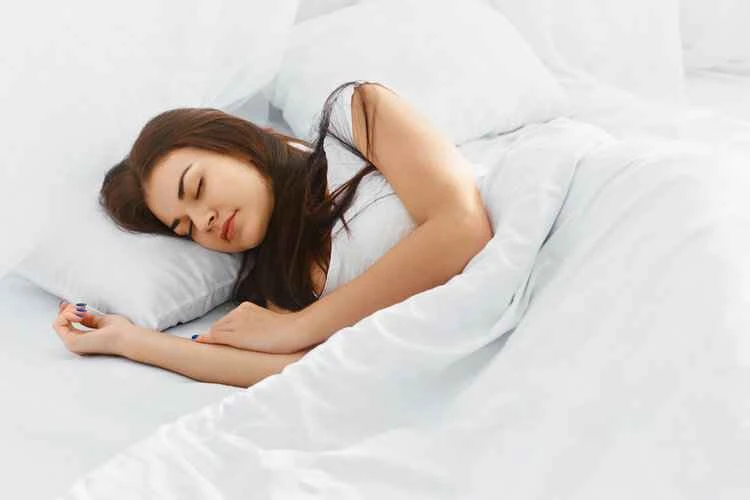
Of course, you can't force a sleeping position, and it's hard to control your posture once you're asleep. The most important thing is to sleep comfortably so you can wake up refreshed. For couples who are inseparable, it's best to put aside your sweet talk for now and just sleep however you feel comfortable!
References:
[1] "[Knowledge Boost] These Diseases Have 'Exclusive' Sleeping Positions". First Affiliated Hospital of Guangzhou University of Chinese Medicine. 2021-01-16
[2] "Chronic lower back pain? It may be caused by incorrect sleeping posture." Guangming Daily. 2020-06-21
[3] Xu Donghua . Poor sleeping posture affects health [J]. Health Expo, 2016:10.
[4] Wei Yingqi. Correct sleeping posture can cure diseases [J]. Chinese Health Preservation (First Half Month). 2008-10-01