In December, 30-year-old Deng Ming (pseudonym) went to the hospital for examination due to unbearable abdominal pain. He was diagnosed with late-stage liver cancer and cirrhosis. His sister, Azhu (pseudonym), who had married far away, rushed to the hospital as soon as she heard the news.
However, after caring for her brother for more than ten days, Azhu discovered that since her brother was diagnosed with cancer, her sister-in-law, who had only been married to her for a year, had abandoned her brother and returned to her parents' home. She had only visited once during that time, and had not offered a single word of concern. When a reporter asked Deng Ming how he felt, he could only smile bitterly from his hospital bed: "Well, it's a bit sad."

The doctor stated that Deng Ming had been smoking and drinking since his teens , and his condition was not optimistic; his maximum life expectancy was only three months. Because Deng Ming was bored in the hospital, his family decided to go along with his wishes and take him back to his hometown. The family also hoped that Deng Ming's wife could return, fulfilling his last wish.
It's truly a pity that someone in their prime at 30 years old developed late-stage liver cancer. Therefore, we urge readers to protect their health and not squander it just because they are young. Many diseases that seem to only affect the elderly are increasingly affecting younger people, and liver cancer is one of them.
I. Liver cancer is increasingly affecting younger people.
Liver cancer has an insidious onset, rapid progression, high mortality rate, and poor prognosis, with an overall 5-year survival rate of only 14% . While liver cancer is generally considered a disease of middle-aged and elderly people, recent statistics show that the peak age of liver cancer incidence in China has shifted dramatically from 40-55 years old to 35-50 years old , and its geographical distribution shows a higher incidence in coastal areas and inland regions, and a higher incidence in the southeast and northwest .

Image source: Internet
Cancer is the result of multiple factors, and liver cancer is no exception. Currently, we haven't determined the exact reasons for the increasing prevalence of liver cancer in younger people, but we believe that certain known carcinogenic factors are stimulating the liver more than before, which is an important reason for this trend.
Among these, tobacco and alcohol cause the most direct damage to the liver, and young people are more likely to be exposed to them . Both tobacco and alcohol are known carcinogens, classified as Group 1 carcinogens by the International Agency for Research on Cancer. Alcohol needs to be broken down by the liver, and incomplete breakdown produces acetaldehyde, a carcinogen that directly affects the liver . Long-term drinkers are prone to fatty liver and alcoholic liver disease, increasing their risk of cirrhosis and cancer.
Many people only think of lung cancer when they think of smoking, but smoking also increases the risk of throat cancer, esophageal cancer, liver cancer, stomach cancer, and more . Furthermore, it has serious effects on various parts of the body, including the cardiovascular system, skin, brain, and reproductive system.

In addition, other factors that affect the liver and may increase the risk of liver cancer are at play, such as hepatitis, which can also increase the risk of liver cancer, and aflatoxin in expired or spoiled food, which can also lead to a significant increase in the risk of liver cancer.
These factors play a role in a large number of young people, causing some to develop cancer at a young age.
II. Early symptoms of liver cancer are often subtle.
The overall survival rate of liver cancer is not high, not only because the disease progresses rapidly, but also because early-stage liver cancer is very insidious and basically has no obvious symptoms.
A small number of liver cancer patients may experience indigestion, loss of appetite, nausea and vomiting , diarrhea and fatigue, or unexplained weight loss . However, these symptoms are easily mistaken for other minor ailments and are therefore often overlooked.

Some liver cancer patients experience symptoms such as itchy skin, ascites, and jaundice in the early stages . If liver cancer occurs in the early stages, it is generally classified as jaundice-type liver cancer, while most liver cancer patients develop jaundice in the middle or late stages.
Please remember these 7 symptoms: indigestion, loss of appetite, nausea and vomiting, diarrhea and fatigue, unexplained weight loss, itchy skin, ascites, and jaundice!
III. How to detect liver cancer early?
Early-stage liver cancer is not easily detected by simply looking at the surface symptoms, but some medical methods can help us.
One method is to check for the tumor marker AFP (alpha-fetoprotein), and the other is to have an ultrasound .

AFP is closely associated with various tumors, including liver cancer, and is therefore a tumor marker for detecting primary liver cancer. AFP is highly sensitive to primary liver cancer; once liver cells become cancerous, the concentration of AFP in the blood will increase in 80% of patients .
AFP can be detected up to 8 months before liver cancer symptoms appear, so AFP is of great significance in the early detection of liver cancer.
However, in addition to primary liver cancer, diseases such as acute and chronic hepatitis, cirrhosis, germ cell tumors, viral hepatitis, liver damage, and congestive hepatomegaly can also cause elevated AFP levels. Therefore, ultrasound screening is necessary to further determine whether the patient has liver cancer.
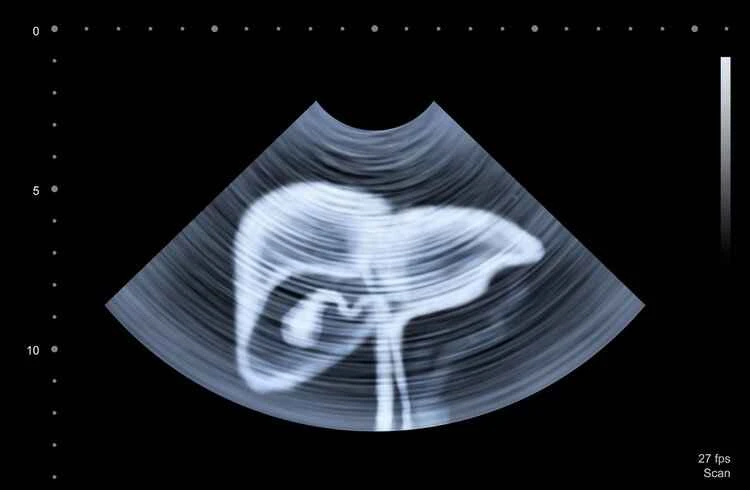
It should be noted that relying solely on AFP (alpha-fetoprotein) levels cannot definitively diagnose early-stage liver cancer, nor can an ultrasound alone provide a highly accurate diagnosis. This is because ultrasound has limited penetration and low resolution, making some liver cancers difficult to detect. Furthermore, interpreting ultrasound images heavily relies on the doctor's experience. Therefore, combining both methods will result in a higher accuracy rate in diagnosing liver cancer. In necessary cases, additional examinations may be required for definitive diagnosis.
References:
1. "An Analysis of the Reasons for the Younger Age of Onset of Primary Liver Cancer." World's Latest Medical Information Digest (Serial Electronic Journal). Issue 53, 2015.
2. "There are 4 major methods for liver cancer detection, but this method is the most commonly used." People's Daily Online. February 28, 2018.
3. "7 Most Common Early Symptoms of Liver Cancer, Not All of Them Cause Liver Pain." Health Times. October 13, 2015.