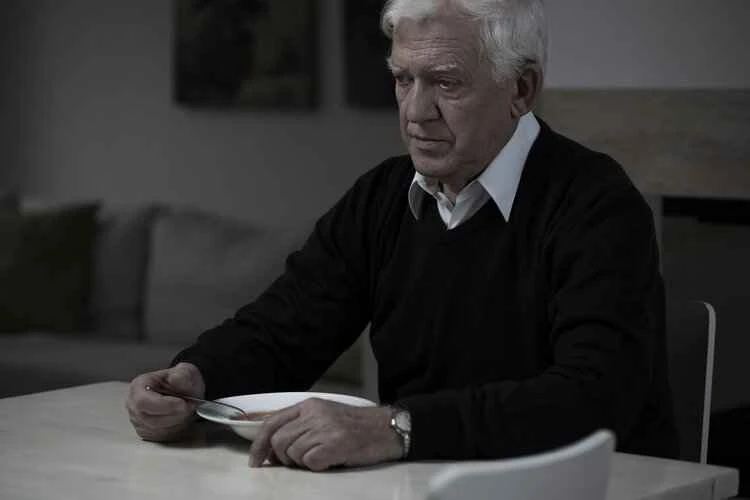
One is indifferent, the other is irritable; one is impervious to both soft and hard approaches, the other is completely unyielding. When a marriage enters a period of stagnation, it's like a gear without oil. Every adjustment period is a drain on each other's energy. This leads to guerrilla warfare using nagging and complaints as weapons, passive-aggressive behavior of ignoring each other, confrontations involving family members, and even hand-to-hand combat... In fact, of all types of marital conflict, the silent treatment is often the most damaging.
cold war
Description: No matter how much you argue, how much you make a scene, or how much you lose your temper, I ignore you completely. You can scold me all you want, you can nag me all you want, I just let it go in one ear and out the other. I'm completely defensive, and there's absolutely no emotional or spiritual communication between us.
Harmfulness: ★★★★
Emotional abuse is just as destructive to a marriage as physical violence. Some physical violence stems from minor personality flaws in one partner, leading to emotional outbursts or inappropriate behavior while intoxicated. Many people regret their actions and attempt to make amends after such physical violence; therefore, physical violence is not the primary or direct cause of damage to the marriage.
The most terrifying thing is the cold war. In fact, the cold war is a lack of willingness to communicate, an abandonment of communication. Sometimes it is even more devastating than physical fighting. Sometimes physical fighting is one party trying to communicate, but it is a communication that lacks methods. It is a very stupid, foolish, primitive, animalistic communication. As long as it is not a real bad habit, such as fighting only once or twice in a lifetime, it is not particularly serious. The most terrifying thing is emotional abuse, a kind of abandonment of marriage. Abandoning without dissolving is the longest and most helpless. Abandoning is at least finding relief.
hand-to-hand combat
Description: Driven to desperation by a single sentence from the other party, or perhaps due to intoxication and impulsiveness, they roll up their sleeves and get into a brawl, only stopping when they regain their senses or feel remorse.
Harmfulness: ★★★
From the newly enacted Anti-Domestic Violence Law, we see that physical violence (so-called "hand-to-hand combat") may cause more visible physical damage, making it easier to obtain legal protection and seek help. However, there's also a frequency issue with hand-to-hand combat. If a couple has been married for twenty or thirty years and has only had one or two instances of physical violence, the damage, even if it was somewhat intense at the time, is not difficult to repair. What's worrisome is prolonged physical violence, or violence where one party is dominant and the other submissive, with one always suffering abuse. This kind of violence causes severe damage both mentally and physically.
Battle
Description: By uniting children, in-laws, parents, siblings, and relatives and friends, a united front is formed to condemn and even attack the other party, shrinking their living space and language space until no one sympathizes with them and they are disliked by everyone.
Harmfulness: ★★
We do not advocate for a two-way confrontation, where two families get involved in a fight. After all, all violence should be discouraged. If rational and wise individuals mediate, it may not be a bad thing; it can even build bridges between the two families. For example, if the young couple has communication problems, but both sets of parents are rational, they can still communicate effectively despite the confrontation, which is fine. However, if both sets of parents are solely focused on supporting their own children, criticizing the other, exaggerating the other's shortcomings, and adopting a tolerant or even protective attitude towards their children, then it becomes a technical issue. We certainly don't want to see this. If both sets of parents step in to restrain their children, this "confrontation" is actually a form of communication, not a "war."
Guerrilla warfare
Description: Nagging, complaining, blaming, silence... constantly draining your energy and fighting spirit, without engaging in large-scale direct conflict, and even asking, "Can't I even say a few words to you?" Low-violence makes you uncomfortable and restless, like sawing wood, slowly eroding your passion.
Harmful Effects: ★ Guerrilla warfare, in essence, refers to a relatively singular communication style between spouses. Nagging remains merely verbal, without any real behavioral change. This guerrilla warfare can last for 20, 30, or even 50 years, until one spouse reaches the end of their life, perhaps still feeling lost and disappointed that "no one listens to my nagging anymore." In reality, whether man or woman, nagging is a way of expressing a desire for attention from the other. Furthermore, if the "nagging recipient" gets fed up, they can adjust the frequency and manner of nagging. Also, sometimes nagging can be quite comforting; not hearing nagging can be frustrating. Therefore, I don't think guerrilla warfare is particularly harmful. However, nagging can escalate to a point where it can lead to confrontation. Nagging may have become an integral part of life. Good nagging is harmless, but bad nagging can escalate into a cold war or even a physical fight.
The above content is exclusively authorized for use only and may not be reproduced without the copyright holder's authorization.