"All the good men have already been chosen!" In life, we often hear young women of marriageable age complaining like this when choosing a partner.
If you frequent Weibo, Tieba, and Zhihu, you'll easily find all sorts of bizarre and melodramatic love stories on various posts about best friends stealing their boyfriends , with plots as exciting as "The Temptation of Going Home."

Image source: Weibo screenshot
Why is it so common for friends to fall for the same person? Why do other people's boyfriends seem more appealing?
Here's a simple scenario: One day you're walking down the street and suddenly you encounter a 5/10 sleazy guy and a 9/10 beautiful woman snuggling against him. Suddenly, the 5/10 guy's sleazy smile seems sunny, his stubble looks dashing and carefree, and his unkempt clothes appear remarkably approachable.
In fact, there is a scientific explanation behind these strange questions— the "mate selection imitation" effect.
I. The Mate Selection Imitation Effect: What you like, I also like.

The mating imitation effect originated from an experiment conducted by zoologists Dugaitin and Gogin in 1992. The experiment found that fish exhibit "mating imitation" behavior, which to some extent reduces the cost of finding a high-quality mate, thus making it more efficient to establish close relationships and reproduce.
This mating behavior in fish also exists in the human world, although human mating imitation is more complex.
In 2016, the journal Evolutionary Psychology published a study titled “Charming female romantic partners provide an unobservable substitute for male qualities: the timing and reasons behind human female partner selection replication,” which corroborated this “mate selection imitation” effect. [2]
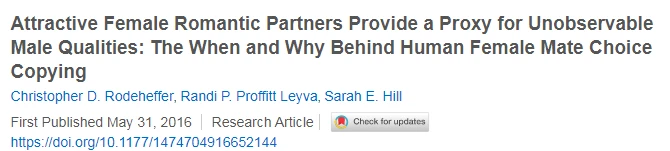
In the first experiment of this study, the team found 148 women aged 17 to 32 (to reduce bias, the researchers concealed the true research subject from them) and prepared photos of both women and men. The photos of the women were randomly labeled as "current girlfriend", "cousin", "adopted sister" or "ex-girlfriend".
Participants rated all the photos of women and paired them with photos of men. Afterward, photos of men were randomly presented, and participants were asked to evaluate the man from multiple perspectives, including "whether they would like to be with him."
The results showed that when faced with the same photo of a man, participants were more likely to want to be with him when the woman next to him was labeled "girlfriend".

In the second experiment, the team recruited 97 women aged 17-28 and divided them into two groups. 47 participants were shown only individual photos of the men, while the remaining 50 were shown photos of the men with attractive girlfriends. The results showed that the participants generally found men with beautiful girlfriends to be more attractive than single men.
Studies have found that having a beautiful woman may make a man stand out; in addition, women generally find men with beautiful girlfriends more attractive than single men!
In other words, when a man is surrounded by a group of women (especially beautiful women), women rate his attractiveness higher than when he stands alone. This might explain why many people, looking at photos of Wang Sicong with young models, find him increasingly handsome and talented…
2. Why do people who have had a relationship have an advantage over single people?
1. Social Learning Model

Just like the herd mentality in consumption, where people tend to chase after "hot" and "highly rated" products, love is no exception. Choosing based on what others have chosen not only saves you energy but also reduces the risk of trial and error .
2. Personal Reasoning
When you lack a thorough understanding of someone or are unsure whether you like them, the appearance of a strong competitor or ex will make you feel that the new target must have some unseen advantages, making you more eager to discover them. This process will then lead to more people joining the search .
Conversely, when you see a very outstanding person who is still single, many questions arise : "With such great qualities, how can he be single?" "Does he have some kind of hidden illness? Otherwise, why haven't any women chosen him?" "He might have some flaws I don't know about; to be on the safe side, I should stay away from him..."
Third, don't worry, there are factors that influence the occurrence of mate selection imitation!
Single people might start to despair upon seeing this: "Am I destined to be alone forever?" Don't worry, the mate selection imitation effect doesn't necessarily occur! Moreover, there are several other influencing factors:
1. Short-term and long-term
In choosing a partner, men tend to focus on a woman's appearance, while women prioritize a man's social status and resources. However, a man's social status and resources cannot always be accurately judged from his appearance , which increases the difficulty for women in finding a partner.

Therefore, if it is just looking for a short-term partner, girls will pay attention to the appearance of the other person just like boys. Appearance information can be obtained directly through observation, so they are less influenced by the same sex (role models) and less likely to engage in mate selection imitation. However, when choosing a long-term partner, the choice of the same sex (role models) has reference value, thus leading to more mate selection imitation behavior. [3]
Therefore, under short-term strategies, women are less likely to replicate their mate selection, while under long-term strategies, women are more likely to replicate their mate selection.
2. Gender
In mate selection imitation , mate selection replication also exists among men, but this effect is more pronounced in women .
This may be because men's criteria for choosing a partner has always been youth and beauty, and they can make a judgment simply by observation , without needing the "approval" of other men to provide clues.
Furthermore, the risk of copying a partner is enormous for men: not only do they have to pay more for dating and pursuing a partner, but they may also have to pay the heavy price of raising someone else's offspring.
3. Target
The target is the potential opposite-sex spouse in the mate selection imitation behavior. Johnson's study published in Human Nature, "Human mate choice and the wedding ring effect," confirmed that the attractiveness of the target affects the mate selection imitation effect. [4]
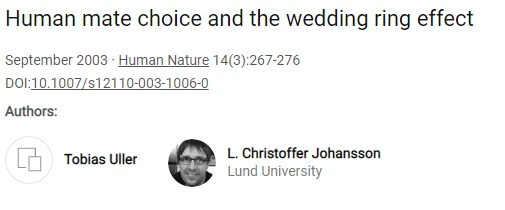
The research experiment involved women interacting with two men (one handsome, the other of average appearance). During the interaction, both men's hands were placed in visible positions; one wore a ring, the other did not. After the interaction, the female participants were asked questions such as, "What was your impression of that man?"
The results showed that the target's attractiveness and marital status jointly influenced the evaluation . Men with low attractiveness wearing rings experienced a stronger replication effect in mate selection, while men with high attractiveness wearing rings experienced a weaker replication effect.
This might be because, in the eyes of the participants, it was not surprising that the men with high physical attractiveness had already been chosen (wearing rings), while the participants would assume that the men with low attractiveness who wore rings must have some subtle advantages that compensated for their lack of physical attractiveness.
4. Role Models
The role model is the person (of the same sex) who pairs up with the target in mating behavior. This is similar to the evolutionary psychology research mentioned above: using the quality of the women a man dates as a reference, the more attractive the women he dates, the more attractive the man is, thus enhancing the mating replication effect.
IV. The Consequences of Imitation in Mate Selection: The Pain of Singles
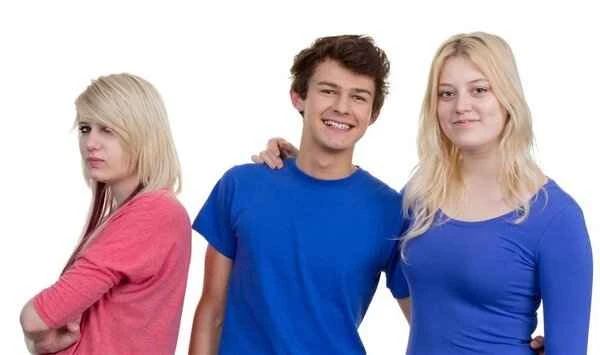
The worst consequence of imitating mate selection behavior is a double blow to single people: one is the existing blow, namely, single men and women are distressed by not having a romantic partner; the other is that "not having a partner" itself becomes the reason why they cannot find a partner.
Over time, this can lead to a "Matthew effect" in relationships, where the winner takes all and the strong get stronger . It's quite possible that those who have been single for a long time will end up "lonely for life."
5. How should a "dating novice" with no dating experience deal with the influence of the mate selection effect?
The consequences of the "mate selection replication" phenomenon are so terrible, does that mean that "love novices" with little dating experience have no way out? Of course not, these "weak" in the dating world should learn how to deal with this "mate selection effect"!
1. Lower your standards for choosing a partner.

A significant reason why many people haven't found a partner or have never been in a relationship is their unwillingness to lower their standards. If you haven't found a partner based on your own criteria, you should re-evaluate whether those criteria are objective and reasonable in order to increase your chances of finding a suitable match.
2. Learn while dating.
A major reason why those who are emotionally vulnerable in relationships fail to find a partner is that they don't know how to date, and the only way to improve is through practice. On the one hand, they need to reflect on how to communicate with their partner and what kind of person is right for them; on the other hand, they need to learn from others and absorb their experiences and lessons.
3. Make yourself a "hot commodity".

Love isn't something you wait for; it's something you strive for. We can enhance our personal charm through various means: boosting our confidence, leveraging our strengths, and learning from those who excel . The goal is to make ourselves more worthy of love, thus making it easier to receive love in return.
It's important to understand that "mate selection imitation" is just a phenomenon, and it only occurs with a certain probability. Those who are "weaker" in relationships try their best to make themselves worthy of being liked by more people, and then the positive influence of "mate selection imitation" will fall on them.
Finally, "mate selection imitation" is merely an inaccurate method of inspiration . While we may be moved by others' touching, enduring love stories, it doesn't mean we should copy their scripts or find partners according to rigid rules. The truly essential lesson in life is gaining a deeper understanding of ourselves and our needs within intimate relationships, and exploring better ways to get along with others.
References:
[1] Zhuang Jinying, Xu Jing, Zhang Sen, & Yu Fei. (2012). Mate Replication: An Adaptive Sexual Selection Strategy. Advances in Psychological Science, 20(10), 1672-1672.
【2】Rodeheffer CD, Proffitt Leyva RP, Hill S E. Attractive female romantic partners provide a proxy for unobservable male qualities: The when and why behind human female mate choice copying[J]. Evolutionary Psychology, 2016, 14(2): 1474704916652144.
[3] Shi Meiling and Sun Chengyu, “Mate Selection Replication: Mate Selection Influenced by Others’ Choices”, China Social Sciences Daily
【4】《Human mate choice and the wedding ring effect. Human Nature》
[5] Li Weiwei, Influencing Factors and Psychological Mechanisms of Mate Selection Replication. 10.16842 / j.cnki.issn2095-5588.2017.03.008
Original content from www.39.net. Unauthorized reproduction is prohibited and will be prosecuted. For content cooperation, please contact: 020-85501999-8819 or [email protected]. The above content is exclusively authorized for use only and may not be reproduced without the copyright holder's authorization.