It's often said that people who fall into the trap of love are always foolish. And it's not hard to see in real life that far too many people experience a drop in IQ when they're in love !
These kinds of romance scam news are now commonplace: "High-quality online girlfriends turned out to be a group of burly men, with the fraud ring involved in xx million yuan," "A septuagenarian fell into a 'twilight romance,' was scammed out of xx million yuan after meeting a young woman on WeChat," "Pig butchering scams and sex fraud are rampant, with 100 million single women becoming lambs to the slaughter"...

If you simply think, "These people are just not smart enough to be easily fooled," you're wrong. In fact, even highly intelligent people are no exception.
Recently, in the scandal involving a female internet celebrity's infidelity that has caused a stir online, the male protagonist, a smart CEO of a startup company in Hangzhou, still couldn't escape being treated as a "money-spending tool" by his heavily invested internet celebrity girlfriend. He only realized the truth when his girlfriend secretly got engaged to someone else on the day she told him.
No one can escape the "brain-reducing" buff of love. From dating novices who have never been in a relationship to seasoned veterans who have seen countless people, many highly intelligent people immediately lose their minds and their IQ drops to zero when they fall in love.
So what magic does love possess that makes people's "IQ drop to 0"?
1. The "love hormone" dopamine makes you temporarily forgetful.

It's often said that love is a biochemical reaction; when people feel love, neurotransmitters like dopamine are continuously secreted in the thalamus . Under the influence of dopamine, we experience the happiness of love.
On January 20, 2021, researchers from the Scripps Research Institute in the United States published a research paper entitled “Dopamine-based transient amnesia mechanism” in the top international academic journal Nature. [1]
The research team studied fruit flies, a model organism with a relatively simple brain structure. They trained the flies to fly by associating odors with unpleasant foot vibrations. The team then observed that several interfering stimuli (such as blue light, electric shocks, or airflow) distracted the flies, causing them to temporarily forget the negative association with the odor . Interestingly, stronger stimuli resulted in longer periods of forgetting.
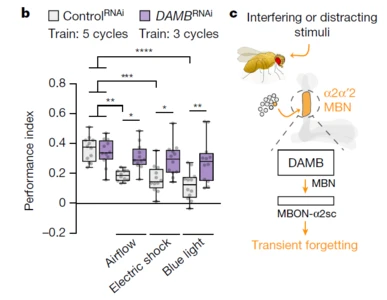
The study ultimately identified a memory mechanism involving transient forgetting that occurs when dopamine neurons are involved: dopamine neurons temporarily inhibit memory retrieval , and as time passes, the temporarily inhibited memory can be retrieved again, and this part of the memory becomes clear.
While memory loss is a common phenomenon, short-term memory loss is no small matter. It can easily disrupt a person's planning, interpersonal relationships, and ability to make quick, flexible, and appropriate choices.

This explains why some people lose their rationality and common-sense judgment when in love: the surge of dopamine released during a relationship temporarily suppresses some memories, blurring previously attempted judgments. Once the relationship ends, dopamine levels decrease, these temporarily suppressed memories gradually clear, and rationality returns.
2. When you're deeply in love, the density of gray matter in your brain decreases, making you feel "like you have intellectual disabilities."
In 2016, Japanese researchers conducted a study on couples in love. The experiment was divided into two groups: one group consisted of 56 young men and women who were in love, and the other group was a control group of similar age who were not in a romantic relationship. [2]
Through comparison of two groups, a survey of participants' well-being, and brain structure scans, it was ultimately found that men and women in the throes of new love had reduced gray matter in the reward processing areas of their brains.
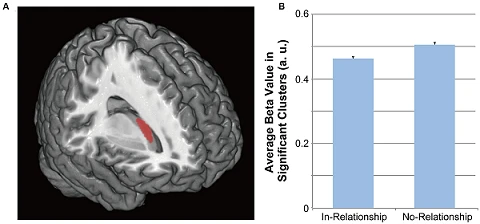
The gray matter of the brain belongs to the prelimbic system, which, in addition to controlling muscles, vision, hearing, memory, and emotions, also includes our decision-making ability. Research suggests that in order to adapt to the intensity of their love, the brains of people in love "lower" their reward sensitivity, thus "inadvertently" reducing their decision-making ability, making lovers appear "mentally challenged."
Third, some extreme relationships can also cause your behavior to become abnormal.
In the movie "I Belonged to You," the male protagonist goes bankrupt and exhausts all his resources to send his girlfriend abroad, only to find everything changed when she returns, and she eventually leaves him. The protagonist's love story perfectly exemplifies the saying, "A simp who licks his boots ends up with nothing."

Why do some people's love affairs become so "extreme"? The Journal of Social and Clinical Psychology Research published a related study, which, in a study translated into Chinese as "Extreme Love: Sudden Sacrifice of Career, Family, and Dignity," found that people's behavior in love can exhibit a certain degree of abnormality. [3]
Furthermore, in some extreme cases of unrequited love (what we call "simps"), people are willing to go to great lengths to pursue love, sometimes even sacrificing their careers, families, and dignity.
IV. When love takes hold, no one can stop it.

Just as netizens are always worried sick about Ma Sichun's love life, many women are frustrated with their best friends who are clearly not "good people" but when they are in love, they always "don't listen to reason and keep nagging."
This can still be attributed to the decline in intelligence caused by love. On the one hand, love makes people in love lose their intelligence and their evaluation ability fail. On the other hand, it may trigger the "Romeo and Juliet effect," which means that when lovers feel that the whole world is hindering their love, they believe that this is a necessary trial for love and they should do the opposite to make their relationship stronger.

First, cultivate composure, then love. The best love should be between two free souls. If you can't maintain your individuality, you'll not only be led astray by unscrupulous men and women, but you'll also be irresponsibly and destructively neglect your own personal development. Beyond the initial impulsiveness, there are long-term, accumulated problems: emotional blackmail, insecurity, self-deception… and ultimately, it's yourself who gets hurt.
Being love-struck is so dangerous; perhaps the best way to avoid the risks is to remain noble in our single lives. Between a sweet romance and preserving your intelligence by staying single, which would you choose?
References
【1】 Nature volume591, pages426–430(2021): Dopamine-based mechanism for transient forgetting
【2】 "Being in a Romantic Relationship Is Associated with Reduced Gray Matter Density in Striatum and Increased Subjective Happiness" https://doi.org/10.3389/fpsyg.2016.01763
【3】 "Extremities of Love: The Sudden Sacrifice of Career, Family, Dignity" Journal of Social and Clinical Psychology 16(2): 200-212
[4] Why does love cause "IQ depletion"? https://mp.weixin.qq.com/s/xCsyFaaJjqerGMq3SMlCSg
The above content is exclusively authorized for use only and may not be reproduced without the copyright holder's authorization.