Ahem, in the last episode, Xiao Jiu shared 10 things to know about tampons. If you missed it, click the hyperlink on the left to catch up!
At the end of last article, we mentioned some more cost-effective menstrual products—that's right, the "menstrual cup"! You see, just the name itself evokes a story, a vivid image, and a lot of problems:
"Why is there a 'cup'?? How can it last for ten years?? What kind of 'cup' is this? How do you use it?? A 'cup' sounds really big??? This…"
While tampons offer many advantages over regular sanitary napkins, drawbacks such as toxic shock syndrome (TSS) and a relatively high price deter many women. Today, I'll seriously introduce the third menstrual product – the menstrual cup!
Can a menstrual cup be used for 10 years?
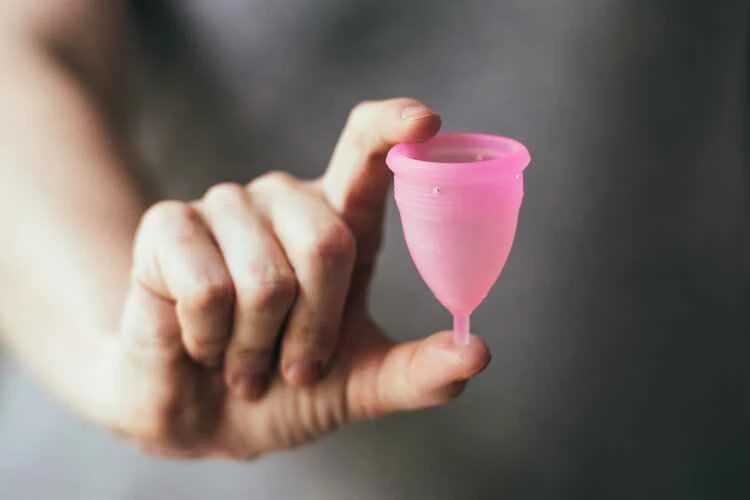
Menstrual cups, also known as "moon cups," are mostly made of soft and elastic materials such as medical-grade silicone and rubber. In terms of shape, a menstrual cup resembles a deformed funnel, with a bell-shaped container at the top and a short handle at the bottom, and its overall height is usually less than 7.3 centimeters.
Like tampons, menstrual cups are inserted into a woman's vagina, but unlike tampons, they don't absorb menstrual blood. Instead, they collect the blood into the "cup" and then discard it after removal.
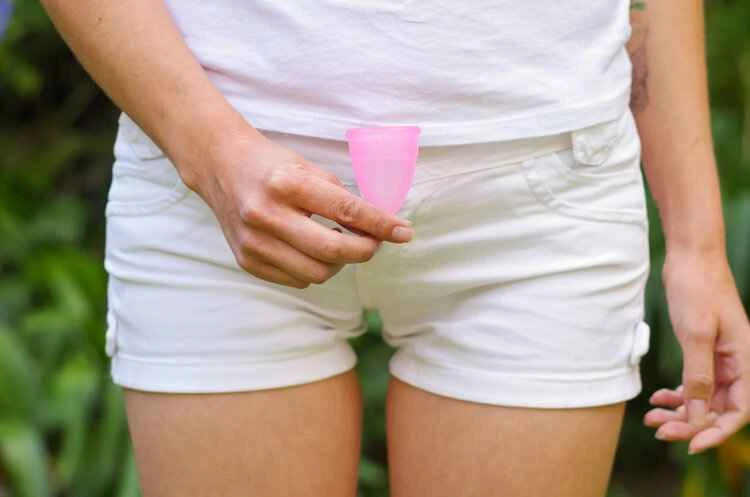
Tampons are more hygienic and comfortable than the more common sanitary napkins, while menstrual cups have four major advantages over tampons:
Cheaper: Tampons are a bit more expensive, costing three or four hundred yuan a year, while a menstrual cup that can be reused for 2 to 10 years can be bought for two or three hundred yuan, which is incredibly affordable!
Safer: Tampons can be so comfortable that you forget you're on your period, but if you leave them on for more than 8 hours, it can lead to toxic shock syndrome (TSS). Menstrual cups only collect menstrual blood and do not absorb it, so there is no risk of TSS.
More convenient: Menstrual cups can be left inside the body for up to 12 hours. For a working woman, it's much more convenient to simply insert it before leaving for work and remove it when she gets home. If menstrual flow is heavy, removing and emptying it 2-4 times a day is sufficient.
More intuitive: Menstrual flow is one of the standards for judging whether menstruation is normal. The menstrual flow of a healthy woman is between 30ml and 50ml. Those who use sanitary napkins and tampons can only make a rough estimate. A large menstrual cup has a capacity of 30ml. With such a reference, you can more accurately understand your daily menstrual flow!
How to properly place and remove a menstrual cup?
Next comes the part everyone's most concerned about: insertion! Just think, it's already difficult for many girls to correctly insert a tiny tampon into their body, so wouldn't inserting a menstrual cup be even more troublesome?
For some men... they might worry that such a large size could affect their partner... emmmm, I won't go into details, everyone understands anyway.
Menstrual cups come in different sizes. When naturally unfolded, the diameter of the bell-shaped part is over 4cm, making it difficult to insert directly. Therefore, it needs to be folded before insertion. Menstrual cups can be bent in any shape. You can explore and experiment to find the shape that best suits you, as long as it can easily pass through the "membrane" and successfully enter the vagina.
Once inserted into the vagina, the folded menstrual cup will unfold due to its elasticity, conforming to the vaginal wall. Don't worry, this high elasticity and close fit ensure the menstrual cup won't stretch the vagina! (Attention, concerned men!)
A feeling of something in your body? No sexual experience?
And here comes the question that girls care about most: Will it feel like there's something in it?
Xiao Jiu is here to share some science: The posterior two-thirds of the vagina has almost no nerve endings. This means that if you place it in the correct position, you won't feel any foreign object. If you do feel a foreign object, it means it's still in the anterior third of the vagina.
If leakage occurs, it may be because the menstrual cup is not fully opened or not positioned correctly. Gently rotate the short handle of the menstrual cup with your fingers, and the cup will easily fit properly!
A menstrual cup can be left in for a maximum of 12 hours. Once the time is up, you can remove it by gently pulling on the short stem at the bottom. However, 12 hours is not a hard and fast rule; some women with heavy flow may only need a few hours to fill up.
You can decide when to change based on your menstrual flow, personal needs, etc. This is a process of continuous exploration and adjustment.
Some people will surely have questions: Can it be used if you have no sexual experience?
The tampons in the last issue were like this, but surprisingly, it was all men who raised this question... I think they'll be even more anxious when they see the size of this menstrual cup.
The official description says it's suitable for those without sexual experience and comes in smaller sizes. However, if a girl still has reservations, she can just consider it something new and doesn't have to use it. These products were originally designed to cater to women; the choice is ultimately hers.
As for men... all I can tell you is that, as mentioned above, this little thing won't "affect" you, so don't worry too much. Besides, the vagina belongs to the women, and they can use whatever is appropriate for their menstrual cycle.
What are some important details you should pay attention to when using a menstrual cup?
For disposable sanitary napkins or tampons, simply cleaning your hands before use is sufficient. However, for reusable menstrual cups, in addition to requiring users to clean their hands, an extra sterilization process is necessary.
When you buy a new menstrual cup, you must sterilize it before use. Some products come with sterilization wipes, but if not, you can boil it in boiling water for 5 minutes.
After each use, remove the menstrual cup, pour out the menstrual blood, rinse it thoroughly with clean water, and it can be reused. After your period ends, simply follow the first step to disinfect, clean, and store it!
If this is your first time using a menstrual cup, you may experience leakage due to improper placement. Therefore, I recommend that beginners use it with sanitary napkins at the beginning to avoid the embarrassment of blood staining clothes.
If you have heavy menstrual flow and need to remove it every four or five hours, it is recommended to buy an extra one as a backup, since cleaning and disinfecting it may not be convenient when you are at work or out and about.
From menstrual pads wrapped in wood ash to sanitary napkins, and now to more comfortable menstrual cups and tampons, innovative menstrual products are constantly liberating women's bodies and giving them more freedom during their periods. Which one do you ladies like best?
The above content is exclusively authorized for use only and may not be reproduced without the copyright holder's authorization.