Ms. Li, 26, was diagnosed with an ovarian cyst during a company physical examination two years ago. At that time, the cyst was only 3 centimeters in size, and the doctor advised her to have regular check-ups instead of undergoing surgery. However, Ms. Li was in the prime of her career and often forgot to have check-ups. Thinking that the cyst was small and she didn't feel any discomfort, she didn't go to the hospital again.
Two years later, Ms. Li was rushed to the hospital due to sudden abdominal pain, which almost caused her to go into shock. Medical staff found that her ovarian cyst had ruptured and she needed immediate surgery to save her life.
After three hours of emergency treatment, Ms. Li was finally out of danger. As for why the cyst ruptured, the doctor learned that on the night she was admitted to the hospital, Ms. Li had been having intercourse with her husband, and because her husband's movements were too vigorous, it unintentionally caused Ms. Li's ovarian cyst to rupture.

Ovarian cysts are a "time bomb".
Ovarian cysts are sac-like structures that form inside or on the surface of the ovary, and may contain fluid or solid substances. This condition is relatively common in gynecological diseases. Ovarian cysts can be classified in several ways; based on whether their formation is related to the menstrual cycle, they can be divided into two main categories: functional cysts and non-functional cysts.
Functional cysts (including follicular cysts and corpus luteum cysts), also known as physiological cysts or ovarian tumor-like lesions, do not cause pain, usually do not harm health , and often disappear on their own after 2 to 3 menstrual cycles.
Non-functional cysts are pathological cysts that do not spontaneously decrease after more than 3 months. There are many types of these cysts, the vast majority of which are benign, while a small number are malignant (cancer).
Although most ovarian cysts are benign, they still pose many variables and risks, threatening human health.
1. Risk of cancer
Different types of ovarian cysts have different malignancy rates, and the rate of malignancy increases significantly in postmenopausal women. If an ovarian cyst grows rapidly in a short period of time, the possibility of malignancy should generally be considered.
2. Risk of breakage
Studies show that approximately 3% of ovarian cysts rupture. There are two types of rupture: traumatic rupture and spontaneous rupture.
The former is due to impact to the abdomen, such as during childbirth or excessively vigorous intercourse, which may cause the ovarian cyst to rupture.
The latter is commonly seen in malignant transformation of cysts, where the tumor grows rapidly in a short period of time, ruptures through the cyst wall, and causes the ovarian cyst to rupture.
Symptoms of a ruptured ovarian cyst include a large amount of bright red blood , which may flow into the abdominal cavity and irritate the peritoneum, causing peritonitis. In addition, massive bleeding can also lead to hemorrhagic shock.
3. Risk of pedunculated torsion
According to Mao Ying, deputy chief physician of the Department of Obstetrics and Gynecology at Beijing Hospital, ovarian cyst torsion is a common gynecological acute abdominal condition, and about 10% of ovarian tumors will develop torsion.
Uterine torsion often occurs when a patient suddenly changes position, or when the size and position of the uterus change during pregnancy and childbirth. The typical symptom of uterine torsion is sudden, severe pain in one side of the lower abdomen, often accompanied by nausea and vomiting.
What should I do if I am diagnosed with an ovarian cyst?
In most cases, ovarian cysts initially present with no clinical symptoms or obvious signs and are often discovered incidentally during a physical examination. If a suspected ovarian cyst is found during a physical examination, a comprehensive gynecological examination should be performed, including ultrasound, laboratory tests, and abdominal examination . Additionally, if a woman suddenly experiences severe lower abdominal pain, accompanied by nausea, vomiting, or other symptoms, she should seek medical attention immediately.

If an ovarian cyst is detected, different treatment methods will be chosen depending on the type and size of the ovarian cyst.
If an ovarian cyst is found but there are no symptoms, it can be observed and treated, waiting for the cyst to disappear on its own. If symptoms appear, but the ovarian cyst is small, the doctor may prescribe medication. If the ovarian cyst does not disappear on its own or continues to grow, there is a risk of malignancy. In this case, surgical treatment should be performed.
Who are the high-risk groups for women?
Understanding who is at high risk for ovarian cysts allows for early preparation and prevention, reducing the harm caused by the disease. So, who are at high risk for ovarian cysts?
First, there are postmenopausal women over 50. Hormonal imbalances occur around menopause, which can increase the risk of gynecological fibroids or cysts.
Secondly, women who are unmarried and childless, or who marry and have children late in life , have a higher risk of developing ovarian cysts. Therefore, women over 30 who have never had children are advised to have a gynecological examination once a year.
Women with a family history of hereditary ovarian cancer or breast cancer have a higher risk. Studies show that approximately 20–25% of ovarian cancer patients have a family history of cancer.
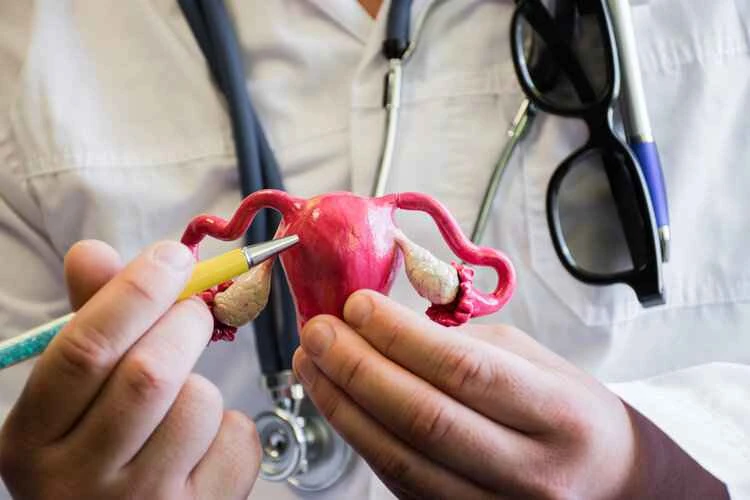
In summary, ovarian cysts are a common gynecological condition, most of which are benign, but malignancy is also possible. Furthermore, rupture or torsion of the pedicle can cause severe abdominal pain and other symptoms. Therefore, it is recommended that women have regular gynecological checkups to rule out the possibility of ovarian cysts.
References
[1] Li Fei. A study on the short-term effects of different hemostasis methods in laparoscopic ovarian cystectomy on ovarian function [J]. Electronic Journal of Clinical Medicine Literature. 2017(22).