"A meal costs only one yuan!"
In a small alleyway just a wall away from Jiangxi Cancer Hospital, Mr. and Mrs. Wan's daily routine consists of buying and cooking groceries. Their initial intention was to provide patients with "a short-term home."
They have persisted for 17 years now...
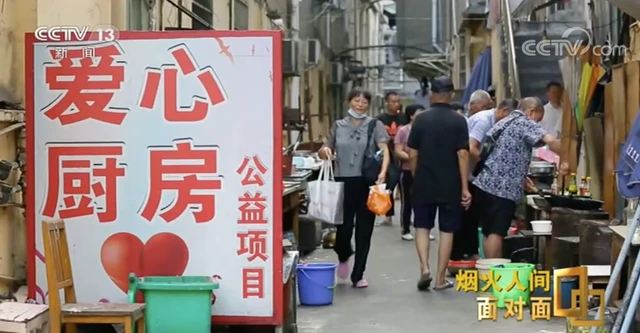
They turned their kitchen into a shared space after asking for help.
Why did this couple start an "anti-cancer kitchen"? Were they wealthy philanthropists? No, it all started with a plea for help.
Mr. and Mrs. Wan are from Nanchang City, Jiangxi Province. Decades ago, due to relocation, they moved to the vicinity of the Cancer Hospital and opened a breakfast stall to make a living. Because of their location near the Cancer Hospital, many patients' families frequently patronized their breakfast stall.
One day in 2003, a middle-aged couple approached Mr. and Mrs. Wang for help. They wanted to borrow Mr. and Mrs. Wang's stove to cook a dish for their child who was suffering from bone cancer, so that their child, who had been away from home for many years and was battling illness, could taste the flavor of home-cooked food while in bed. Mr. and Mrs. Wang were kind-hearted people, and thinking of the boundless love and concern of parents, they agreed without hesitation.
The couple rented Mr. and Mrs. Wang's stove for more than half a month, and the children ate very happily.
Starting with this couple, more and more patients' families in the surrounding area learned that there was a kind couple who could lend them their stoves to cook. As a result, families from the cancer hospital came to Mr. and Mrs. Wan for help.
As more and more people came, Mr. and Mrs. Wan began charging families who came for help one yuan each. However, the fee wasn't for the money, but to ensure the continued maintenance and continuation of this shared kitchen, a place brimming with kindness and goodness. And so, the aroma of home-cooked dishes from all over the country wafted from the shared kitchen.
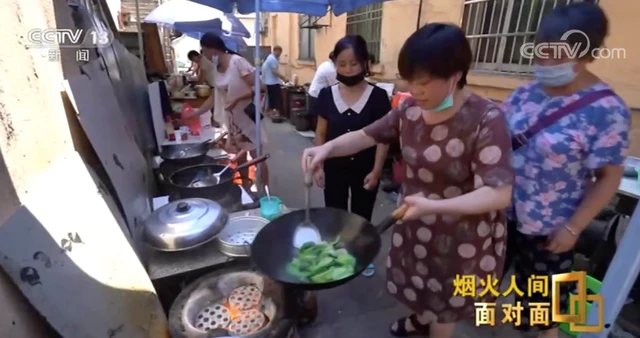
One-yuan stir-fried dishes continue to "warm the heart"
The existence of shared kitchens gives patients and their families who are seeking medical treatment away from home the opportunity to taste a home-cooked meal. The smell of disinfectant in the hospital is so pungent, unfamiliar, and cold, while the familiar taste of home-cooked food can greatly warm their hearts and bodies.
Because the diners are mostly patients and their families, it is also known as the "anti-cancer kitchen".
According to Lao Wan's recollection, there was a young man whose father had just undergone esophageal cancer surgery. The doctor recommended that his father drink more loach soup to aid his recovery. So, the young man went to the kitchen and cooked bowl after bowl of loach soup, each one carrying a son's love for his father. Half a month later, his father was discharged from the hospital without any problems.
While accompanying their loved ones to seek medical treatment and medicine, they often experience the coldness of the world. But Lao Wan brings these patients' families a rare warmth and affection.
Li Chunmei's husband suffers from leukemia, and the family's savings have long been exhausted. Li Chunmei not only needs to take meticulous care of her husband but also has to run around trying to raise money for his medical expenses. Her heart and body bear an immense burden, yet she cannot confide in her seriously ill husband. At Lao Wan's place, she can confide in and communicate with other families of patients going through the same ordeal, offering mutual encouragement. The anti-cancer kitchen has given her the courage and perseverance to keep going.
Yes, the significance of the anti-cancer kitchen lies not only in the food, but also in the gathering of human kindness and the courage to fight against misfortune, and in extending the warmth of life.
Mr. and Mrs. Wan felt that what they were doing was insignificant, just providing a few stove workers with cooking and soup. But it was these few home-cooked dishes that allowed patients and their families to taste "home," that brought people suffering together to keep warm, and that brought hope and warmth to patients and their families. This is why Mr. and Mrs. Wan persisted.
I will continue as long as my health permits.
But Mr. and Mrs. Wan are getting old. Will this kitchen continue? Their answer is: Yes, as long as their bodies can hold up, they will keep it open for as long as possible.

Their journey to running the cancer- fighting kitchen wasn't without its challenges. The kitchen had been forced to relocate due to village regulations. The couple's children and grandchildren initially struggled to understand their decision, hoping the elderly couple could stay away from hospitals and patients. However, over the past decade, the Wang couple has overcome numerous difficulties and successfully managed to keep the kitchen running.
Currently, they are in good health and have no plans to retire early. For this couple, the anti-cancer kitchen has helped many patients and their families. Patients and their families have found long-lost happiness and joy in the warmth of family life, and Mr. and Mrs. Wan also feel happy and joyful because they can help others.
Therefore, this loving kitchen will continue to operate, and the sincerity, kindness, and beauty of humanity will continue to shine brightly in the roaring fire.
References:
[1] "Couple runs 'anti-cancer kitchen' in front of hospital for 15 years, charging only 1 yuan per dish." Global Times. November 13, 2018.
[2] "Elderly couple opens '1 Yuan Anti-Cancer Kitchen' for patients' families". Guangming.com. June 26, 2020.
[3] "Anti-cancer kitchen" has been stationed at the hospital entrance for 16 years. Workers' Daily. February 21, 2019.