He only discovered his wife was HIV-positive after they got married.
This kind of plot, which only happens on TV, actually happened in real life.
Marriage is supposed to be a happy occasion, a time to grow old together with the one you love, but Ah Feng says that marriage has left him devastated and filled with regret.
The bride had HIV before the wedding, and the groom was unaware of it.
Two years ago, in the winter, by chance, A-Feng ( pseudonym ) met Xin-Ran ( pseudonym ). The two fell in love at first sight and got along very well. After dating for half a year, they planned to get married.
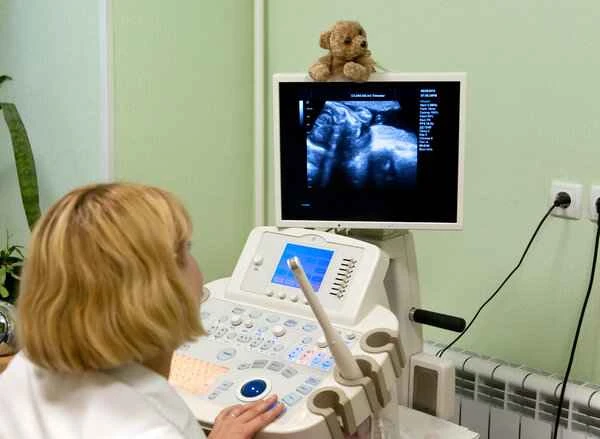
At the end of last year, the two of them were preparing to get their marriage certificate. First, they went to a maternal and child health and family planning service center in Nantong for a premarital check-up. The check-up results showed that there were no health conditions that would make them unsuitable for marriage, so they were able to get their certificate smoothly.
The couple held a grand wedding during the New Year's Day holiday this year.
Two months later, Xinran gave birth to a daughter via cesarean section, and Afeng was also immersed in the joy of becoming a father for the first time, and their relationship reached a new level.
But a truth he accidentally learned made the man feel like the sky was falling.

It turned out that Xinran's pre- and post-operative diagnoses both recorded that she was HIV-infected, commonly known as AIDS. Under Afeng's questioning, Xinran admitted that she knew she was infected before marriage , had registered with the Center for Disease Control and Prevention, and had even undergone a mid-trimester abortion as a result.
This was very difficult for Ah Feng to accept. He felt that he had been greatly deceived. When he went to the hospital for a checkup, he found that he had been infected.
Subsequently, he sued the premarital medical examination agency, seeking 100,000 yuan in compensation for lost betrothal gifts and 20,000 yuan for emotional distress. He felt that AIDS was a disease that should preclude marriage, but the agency failed to prevent it in time, which constituted a serious fault and violated his right to know as a spouse.
However, the court stated that the premarital examination results were not directly related to the subsequent losses and dismissed the plaintiff's claim.
As soon as this case came to light, netizens raised a barrage of questions.


Is HIV/AIDS a disease that prohibits marriage?
Legally speaking, no.
The Regulations on the Prevention and Control of AIDS stipulate that AIDS patients, HIV-infected individuals, and their families enjoy legal rights such as marriage and employment protected by law . While the Marriage Law prohibits marriage for those with medically recognized contraindications to marriage, it does not explicitly state that AIDS is a contraindication . The Maternal and Child Health Care Law considers AIDS to be an infectious disease; if a patient is found to be in the infectious period during premarital examination, the couple should be advised to postpone their marriage.
To put it simply, people living with HIV/AIDS are not prohibited from marrying; at most, they are advised to postpone marriage, and it is not a mandatory regulation.

Should the premarital medical examination institution bear any responsibility?
The relevant lawyers stated that the premarital examination institution is not liable in this case. For the plaintiff to hold the institution liable, a prerequisite must be met: the institution must have committed an infringement, and there must be a causal relationship between the infringement and the resulting damage.
According to the "Regulations on the Prevention and Control of AIDS," staff of medical and health institutions should inform the individual of their HIV infection or illness, but they have no right to inform others ; otherwise, it would be an infringement of the patient's privacy. In other words, if the premarital checkup institution discovers that Xinran is HIV positive, it should inform the woman ( if it doesn't, the woman can pursue legal action ), but it is not required to inform the man.
Therefore, there is no causal relationship between the fault of the premarital examination institution and the resulting harm, and it is not liable.
What should I do if I am unfortunately infected with HIV?
There are two scenarios after HIV infection: one is to stop it within 72 hours, and the other is to seek treatment after 72 hours, as detailed below.
• Early detection and administration of preventative medication within 72 hours
After being infected with HIV, it takes time for the virus to replicate and develop in the body. HIV-infected individuals can use this time gap to save themselves by taking post-exposure prophylaxis ( PEP ).
This medication is an antiretroviral drug. While it cannot directly kill the HIV virus, it interferes with the virus's normal replication process, ultimately preventing the HIV virus from posing a substantial threat to the human body . Studies have shown that the efficacy of HIV post-exposure prophylaxis (PEP) is very significant, with a success rate as high as 95% . It can be taken within 72 hours of infection ( with the best effect when taken within 2 hours of infection ) and needs to be taken continuously for 28 days, 1-2 times a day.

• Adhere to HIV/AIDS treatment
Even if you have been infected with HIV for more than 72 hours, do not give up seeking medical treatment and continue with treatment. Currently, internationally, it is believed that the combined use of several antiretroviral drugs is more effective in treating AIDS. This therapy, also known as "cocktail therapy," has a significant effect on reducing morbidity and mortality, improving quality of life, and prolonging the lifespan of patients .
Friendly reminder :
HIV/AIDS causes immense harm, so we must take preventative measures to avoid infection. If you suspect you have been infected after engaging in high-risk behavior, contact your local CDC immediately and take post-exposure prophylaxis (PEP) medication. If you are eventually diagnosed with HIV, do not give up. Seek timely treatment and do not shy away from medical care; your quality of life and lifespan can still be guaranteed.
References:
[1] A newlywed wife concealed her history of HIV infection, which was not detected during a premarital checkup. Her husband sued her, but the case was dismissed! Guangzhou Legal Education. 2020-08-07
[2] Jin Jian. Epidemic intervention can be performed within 72 hours after high-risk HIV exposure [J]. Jiangsu Health Care, 2019:28.
[3] Wang Yiqin. On the provisions of special disease groups in marriage law - taking AIDS and mental illness as examples in the marriage laws of various countries [J]. Legal System Review, 2019: 91-92+95.