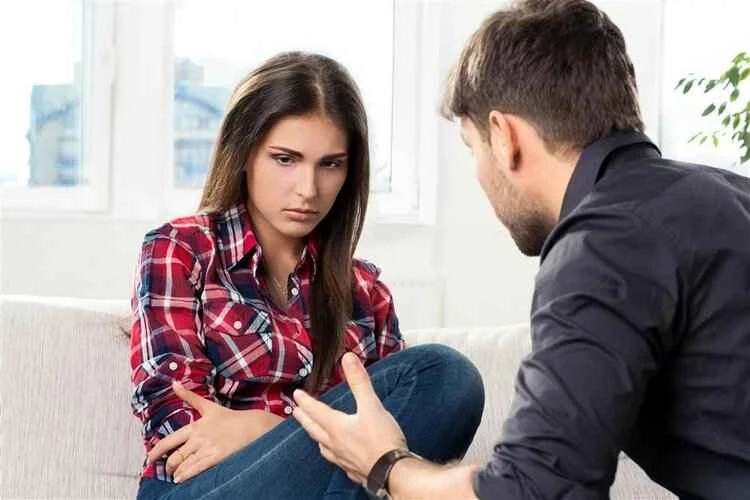
A marriage and dating survey report points out that the biggest reason for the large number of singles is a narrow social circle and too few opportunities. Experts analyze that the rapid urbanization process and the expansion of university enrollment have led to a significant increase in population mobility. In the process of migration, people's ways of making friends and their social circles are gradually shrinking. Often, the social circles that were once familiar are no longer sufficient to meet their current needs, thus giving rise to the "leftover women" group.
What is leftover love?
"Leftovers" refers to a special group of people who are unsold in terms of marriage and romantic relationships, or those who feel emotionally empty. Another way to describe them is those left without a partner after Valentine's Day. This somewhat awkward and self-deprecating group is growing rapidly and is prevalent in modern cities. A wave of singlehood is inevitably spreading rapidly in major cities, and whether it's voluntary or involuntary, being "left behind" carries a degree of embarrassment and helplessness.
What are the different types of "leftover love"?
1. The "waiting indefinitely" type
Tie Ning said that the elderly writer Bing Xin told her, "Don't look for someone, wait." Tie Ning always remembered what the old woman said. As a result, she waited for 50 years. She had ample patience for love. Because, she said, she had high expectations for marriage, preferring not to have one rather than a marriage of convenience.
Modern people often say nonchalantly, "We won't get married just because we're getting older, and we certainly won't marry for the sake of marriage!" However, who can truly bear to grow old alone with themselves? People like Tie Ning, who have the patience to wait 50 years, are a minority. Who dares to say they can optimistically be alone their whole life? Everyone needs to find someone to grow old with.
As Eileen Chang said, "I want you to know that there is always someone in this world waiting for you. No matter when, no matter where. You know there is always someone who is the warmest comfort to those who are lonely and waiting for love."
2. Blind Date Type
Blind dates, once considered a relic of the past where men and women arranged to meet through matchmakers, have become popular among single people in today's society. Various methods of matchmaking have emerged and diversified, including "marriage proposals for children," "online matchmaking," and "television matchmaking." Among these, online matchmaking has become the most convenient and popular method for single men and women in the E-era. Experts predict that blind dates will continue to gain popularity in the future and will become an integral part of the lives of single people.
Undeniably, the role of blind dates is immeasurable. Especially for older, less discerning singles who lack courage in relationships, confidence, and distance themselves from the opposite sex, matchmakers are indeed necessary to find a partner. However, the more blind dates one goes on without success, the lower one's expectations for blind dates become. It's like buying lottery tickets; if you buy too many and never win, seeing a lottery ticket reminds you not to be foolish again.
So, I was quite resistant to blind dates—a game that puts complete strangers together and tells them they're getting married. But humans are contradictory; even if they don't really believe in something, they still hold onto the hope of trying, thinking that maybe fate will bring them together someday. Therefore, all sorts of comical or heartbreaking blind date stories unfold every now and then.
3. Game type
Everyone has their own love story, but when love is repeatedly defeated by reality, people begin to feel helpless about its existence. They then treat relationships like a game, engaging in one-night stands with empty hearts, and what happens after the act?
All the passion from last night is gone. Men say women are emotional creatures, that women love to fantasize and think they can keep men with their bodies. So they start to intentionally or unintentionally use their bodies to please men, and men actually fall for it. They won't let go of the prey they've got, but they won't cherish the prey they've already obtained. This cycle repeats itself, and people become disillusioned with love, just like they've seen through the illusions of the world. They become so emotionally numb that they'd rather stay single than get married.
The crisis faced by single people
2006 marked the true beginning of the singles boom, and we were the first to announce the arrival of the "era of leftover men and women." Data from that time showed that in 2005, there were 300,000 leftover women in Beijing and 430,000 in Shanghai... and these enormous numbers have been increasing exponentially since then.
According to a survey by a marriage website, 65% of men considered women their ideal marriage partner at age 25; this figure rose to 26.5% at age 30; and only 12.5% at age 35. Conversely, 82% of women considered men their ideal romantic partner at age 31, but this figure dropped to 30.4% at age 35 and further to 15.2% at age 40. This clearly shows that the perceived value of men and women in the marriage market declines sharply with age, and this is particularly true for women. Single women, especially those who are still single, should be aware of this situation.
Approaching love and marriage correctly
In societies where marriage is fundamental, the institution of marriage is considered the most stable system of social management, and the bilateral monopoly between spouses is considered the most reliable of all relationships. Therefore, marriage is seen as the ultimate and proper destination for everyone. Consequently, single individuals outside of marriage face discrimination to varying degrees, both in terms of social perception and institutional norms.
In reality, many people who remain single are pushing themselves into a dead end in love. Many men and women today choose to remain single because they are facing immense life pressures and want to escape responsibility. Marriage means taking on social, family, and societal responsibilities. Perhaps due to overwhelming work and economic pressures, some young people even develop a mentality of escaping these responsibilities and choose to remain single.
Modern views on choosing a partner are far removed from the past when marriages were arranged by parents and matchmakers. As people have gradually placed many restrictions on love, our requirements for a partner have also become increasingly higher. Don't imagine marriage to be too idealistic; there will inevitably be thorns and bumps along the way. But don't see marriage as the grave of love either; it's a stop on life's journey, a process of mutual growth for both partners.