On a typical Friday night, Li Ai's colleagues would leave work early, eager to go home and enjoy a relaxing weekend. It was eight o'clock, but Li Ai was still sitting at her desk, looking out the window at the brightly lit city, the bustling streets—what a vibrant and lively scene it must be! But then she thought of her cold, empty home, and Li Ai felt a sense of dread.
Married for seven years, the couple is always busy, so busy that they can't go home for dinner together, so busy that they can't remember the last time they spent a weekend together, and so busy that they don't have time to have children. Both are also argumentative and often quarrel over trivial matters. Today is the fifth day of Li Ai and her husband's cold war; they haven't spoken a single word to each other in the past five days.

Perhaps this is what the "seven-year itch" is like? The beautiful memories of the past vanish in an instant, leaving behind nothing but a mess; the promises made at the time of marriage crumble with each argument; and the lover you planned to spend your life with has offered you only a handful of moments of warmth...
On her drive home, Li Ai started experiencing a sharp pain in her lower abdomen again . This had been going on for over a month. She thought it was probably due to her irregular eating habits and decided to buy some stomach medicine the next day.

When Li Ai opened the door at home, she was surprised to find her husband, Lin Shen, already home, with food laid out on the table. Li Ai was astonished, but her expression remained impassive. "Haven't eaten yet? It's freshly made, eat it while it's hot," Lin Shen broke the silence.
"That's really surprising. We've been married for so many years, and I never knew you could cook," Li Ai said sarcastically.
Lin Shen felt a little embarrassed, but instead of refuting Li Ai as usual, he turned around and got her a bowl and chopsticks. Li Ai refused, saying, "My stomach isn't feeling well, I can't eat."
The atmosphere was unusually cold, but Lin Shen had lost his usual toughness and stubbornness. "My stomach isn't feeling well. I need to go to the hospital tomorrow."
"No need, just go to the pharmacy and buy some stomach medicine."
"It would be better to go to the hospital and get a full check-up while we're at it," Lin Shen insisted.
“Didn’t I say I wasn’t going? I just had a physical exam last week, why are there so many tests to do!” Li Ai turned to go into the room.
"Wait a minute." Lin Shen took out the medical examination report from his bag. "I've brought the medical examination report back. Take a look for yourself."
" Squamous cell carcinoma (SCC), diagnosed as cancer. "
Li Ai flipped through the TCT report; the words on it were unusually glaring. Could it be that her recent sharp pains in her lower abdomen were a warning sign of cancer?
Seeing his wife's expression, Lin Shen comforted her, "It's okay, we'll go see a doctor tomorrow. No matter what, I'll be with you."
It turned out that Lin Shen's "abnormal" behavior and changes tonight were all because of this. Thinking about her recent doubts about her marriage, the grievances she had felt during this period, and her current fear, Li Ai covered her face and wept, while Lin Shen simply held her tightly.
That night, neither of them could sleep.

Finally, dawn broke, and Lin Shen and Li Ai went to the hospital to consult a doctor. The doctor suggested that they first undergo examinations to determine the stage of cervical cancer before developing a treatment plan. While waiting for the results, the two decided to open up to each other and tell each other all the grievances and changes they had experienced over the years.
In the end, the two discovered that falling in love is easy, but marriage is not. In their seven-year marriage, due to a lack of effective communication and sufficient companionship, their relationship became distant. One wanted to care but pushed the other further away, while the other loved deeply but used busyness and distance as a shield, making their marriage a thorny path.
Now that the misunderstanding has been cleared up, it turns out that love has always been there, but it had lost its way. Fortunately, they found it again.

The test results came back: stage IA1 cervical cancer . The doctor recommended surgery . Upon hearing about surgery, Li Ai asked in a trembling voice, "Doesn't that mean removing my uterus? But I don't have a baby yet..."
The doctor told her that they would try their best to consider Li Ai's desire to have children and do everything they could to help her preserve her uterus.
Lin Shen embraced his wife and said firmly, "No matter what, I will always love you. Whether we have children or not doesn't matter; the most important thing is that you'll always be with me. "

Cervical cancer is the most common gynecological malignancy, with women aged 30-55 being the most susceptible group, and in recent years there has been a trend of it occurring at younger ages.
Studies have shown that high-risk human papillomavirus (HPV) infection is a major cause of cervical cancer, and sexual transmission is the primary mode of HPV infection. Therefore, both men and women should pay attention to hygiene and safety during sexual activity .
According to social data surveys, women who have sexual intercourse before the age of 18 have a cervical cancer incidence rate that is 4 times higher than women who start having sexual intercourse after the age of 18. In addition, the incidence rate of cervical cancer in women with sexually transmitted diseases such as gonorrhea and syphilis is 8 times higher than that in women without these diseases.
It is evident that women who begin sexual activity too early or engage in unsafe sexual practices may develop cervical cancer.

In addition to paying attention to their own sexual behavior, women should not overlook the situation of their partners. When a woman's partner has phimosis or redundant foreskin, or if the man has prostate cancer or genital cancer, the wife's incidence of cervical cancer will also increase.
Furthermore, a woman's risk of developing cervical cancer increases if her partner has multiple sexual partners.
Early detection of cervical cancer plays a positive role in treatment outcomes.
Thanks to effective screening, the cervical cancer mortality rate has decreased by 70% in the past five years.
Therefore, we must never ignore discomfort in our bodies. Like Li Ai in the story above, she had been experiencing obvious discomfort in her lower abdomen for almost a month, but she did not pay attention to it. If it had not been discovered during a physical examination, it would probably have been delayed for even longer, and the condition could have easily developed into serious consequences.
Irregular vaginal bleeding is a prominent early symptom of cervical cancer. Young patients should be alert if they experience unexplained prolonged menstrual periods or significantly increased bleeding; postmenopausal women who have not been sexually active should also pay attention to irregular vaginal bleeding.
In addition, an abnormal increase in vaginal discharge is also an important sign of cervical cancer. If there is cancer in the body, the necrosis of cancerous tissue accompanied by infection will cause the discharge to be watery or rice-water-like, with a strong fishy odor.
Early detection of symptoms and a visit to the hospital for a gynecological examination can effectively improve the diagnosis and survival rates of cancer. Cervical cancer screening mainly involves a combined TCT and HPV screening . If both TCT and HPV screenings are normal, the doctor will consider cervical inflammation-related bleeding and treat it as cervicitis.
If either the TCT or HPV test result is abnormal, the patient will need to undergo a colposcopy. During the colposcopy, if any abnormal pathological changes are found, a biopsy will be taken for pathological examination. The doctor will then use the pathological diagnosis to further confirm whether it is cervical cancer.
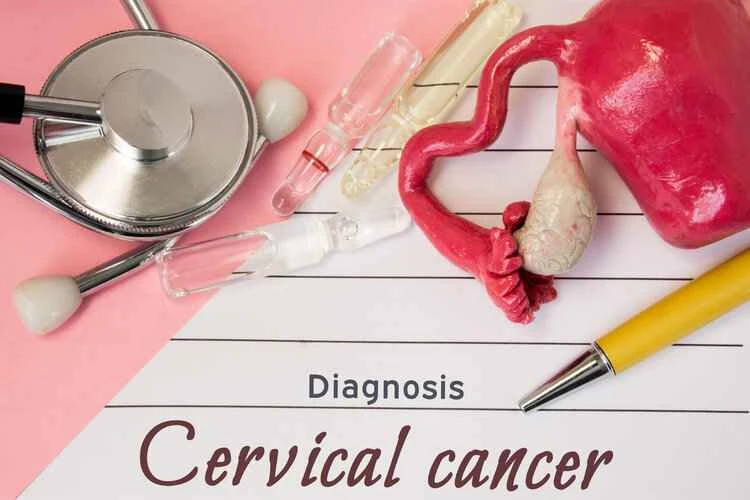
Xiao Ai would like to add a few more words: Although cervical cancer is a malignant tumor, if you pay attention to prevention in your daily life, learn more about relevant gynecological knowledge, and pay attention to cleaning and taking care of your body, you can greatly reduce the incidence rate.
High-risk women who participate in regular cervical screenings can detect early cervical cancer lesions. Once detected early, the cure rate for precancerous cervical lesions is as high as 98%, which can ultimately prevent the occurrence of cervical cancer.
Don't neglect your health at such a young age.
References:
1. Ni Qiongying. What are the main causes of cervical cancer? [J]. Health Preservation Guide, 2019, (48): 74.
2. Yuan Hua. What are the warning signs of cervical cancer? [J]. Dietary Health Care, 2019, 6(39):271-272.
The above content is exclusively authorized for use only and may not be reproduced without the copyright holder's authorization.