Cervical erosion seems to be an unavoidable hurdle for many women. Because the word "erosion" is so impactful, it has become a major area of overtreatment. Many patients travel extensively seeking treatment for cervical erosion. Some unscrupulous businesses may even exploit girls' anxiety, persuading them to spend money and energy on treatments.
But in fact, cervical erosion is not a disease! Today is March 15th, International Consumer Rights Day. Let's expose the scams surrounding cervical erosion and some gynecological "diseases" that don't require treatment.
I. Cervical erosion is not a disease!
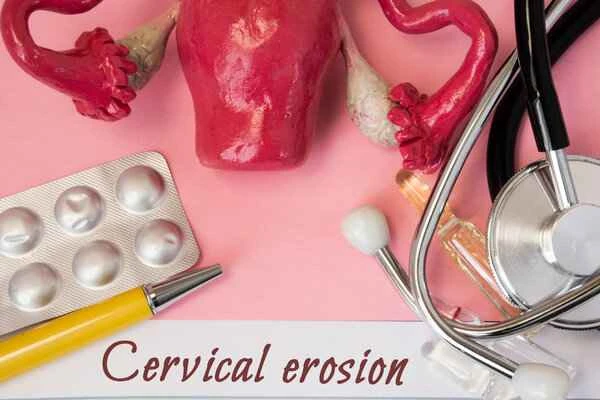
The term "cervical erosion" originated over 100 years ago due to the limited medical technology at the time. During gynecological examinations, if the cervix appeared red and resembled ulcers, it was named cervical erosion.
Cervical erosion is caused by newly grown columnar epithelium covering the surface of the cervix and then shedding. Therefore, modern medicine refers to cervical erosion as cervical columnar epithelial ectopia, which is a normal phenomenon.
The reason many women are afraid of cervical erosion is not because they are afraid of the "erosion" itself, but because they are worried about cervical cancer. However, cervical erosion is not related to cervical cancer. Cervical cancer is mainly caused by long-term viral infection, not by a transformation of "cervical erosion".
Moreover, it typically takes about 10 years from HPV infection to cervical cancer, giving us ample time to detect and treat the infection promptly. Even if an HPV infection is detected, there's no need to worry; in most cases, if the body is healthy and has a normal immune system, it will clear up naturally within two years.
Therefore, even if you are worried about cervical cancer, there is no need to over-treat cervical erosion.
II. Under what circumstances should a cervical condition require timely examination and treatment?
When the cervix is infected with viruses and bacteria, it is accompanied by increased vaginal discharge, odor, and lower back pain, especially in the lumbosacral region where there is significant pain, and even sexual intercourse is painful. This is no longer a simple case of cervical erosion, but rather cervicitis.
Many women experience contraceptive failure, leading to miscarriage or multiple pregnancies, which can easily cause cervicitis and cervical erosion. In such cases, timely examination and treatment are crucial, along with cervical cancer screening.
III. What other gynecological "diseases" do not require treatment?

1. A small amount of pelvic fluid does not necessarily indicate pelvic inflammatory disease and does not require treatment.
A small amount of pelvic fluid is a physiological phenomenon. Small amounts of physiological fluid may be present in the pelvic cavity during ovulation and around menstruation, and no treatment is required.
Doctors will only consider pelvic inflammatory disease and require standard anti-inflammatory treatment if there is a large amount of fluid accumulation, accompanied by lower abdominal pain or abnormal vaginal discharge.
2. Pseudocondyloma is not a disease and does not require treatment.
Many women are terrified when they hear the word "genital warts." Pseudo-genital warts appear as clusters on the female vulva, resembling small fish eggs or pubic hairs. They are relatively independent, not merging or branching.
However, unlike genital warts, it is not a disease, but a benign tissue growth with an incidence of 20%. It is related to chronic inflammation and friction from wearing tight pants, and generally does not require treatment.
3. Physiological ovarian cysts do not require treatment.
If you discover an ovarian cyst, don't rush to have surgery. In many cases, it is a physiological cyst such as an ovarian follicular cyst or a corpus luteum cyst, which will disappear naturally after menstruation and does not require surgery.
However, if the ovarian cyst persists and grows larger during the follow-up period, the report indicates a solid mixed cystic-solid mass, and abnormal tumor markers, then caution is warranted, and surgical treatment may be necessary.
4. Small, asymptomatic endometrial polyps do not require surgery.
Women who are in good health, are not taking estrogen medications, and have no high-risk factors for endometrial lesions may temporarily leave endometrial polyps (less than 1 cm) untreated if they are found during a physical examination and have no symptoms or abnormal bleeding.
However, regular follow-up is necessary because 27% of small endometrial polyps will disappear naturally within a year.
5. Uterine fibroids do not always require surgery.
20-80% of women will develop fibroids before the age of 50, and the vast majority of fibroids do not require surgery.
The indications for surgery for uterine fibroids are not based on their size.
Uterine fibroids only need to be treated when they cause other problems, such as excessive menstrual bleeding leading to anemia, significant pressure symptoms causing frequent urination or constipation, or infertility.