Recently, a proposal to "ban medical institutions from offering egg freezing services to single women and encourage citizens to marry and have children at an appropriate age" has sparked heated discussions among netizens. Some support it, believing that limiting the misuse of technology is a step forward; others oppose it, arguing that it also restricts women's reproductive rights. However, before debating, we should first understand what egg freezing actually entails.
Australia recorded its first case of childbirth using frozen eggs in 1986, nearly 10 years later than frozen embryos and frozen sperm. Currently, there are over 200 children born worldwide using frozen eggs, but fewer than 20 in China.
Egg freezing, also known as oocyte cryopreservation, involves taking healthy eggs from a woman and freezing them to prevent them from aging along with the body. The eggs can then be retrieved and used when the woman is ready to conceive.
Normally, most women release only one mature egg per month (which is why most normal pregnancies are singletons). However, if egg freezing is desired, before egg retrieval, the woman needs to take ovulation-inducing drugs to develop multiple follicles simultaneously. Then, guided by transvaginal ultrasound, a 35cm long needle with a diameter of 1.6-2.2mm is inserted through the vaginal fornix to reach the ovary. The follicles within the ovary are punctured, and the follicular fluid and eggs are aspirated under negative pressure. Egg retrieval can be performed under local anesthesia or without anesthesia.
After the eggs are retrieved, they are frozen in liquid nitrogen at -196°C. When preparing for pregnancy, if successfully thawed, the frozen eggs will function like fresh eggs. Technically, there is no time limit for freezing eggs, but the international clinical practice is to preserve them for 5 years.
So, under what circumstances would a woman need to freeze her eggs? First, premature ovarian failure caused by chromosomal abnormalities, autoimmune diseases, infections, tumors, etc.; second, to avoid damage to the eggs before undergoing high-dose systemic radiotherapy and chemotherapy for tumors, or ovarian damage caused by multiple surgical treatments for severe recurrent ovarian cysts; third, pelvic inflammatory disease or other conditions that damage the fallopian tubes, making natural conception impossible; and finally, women under 35 years of age who consider having children after 35 for various reasons.
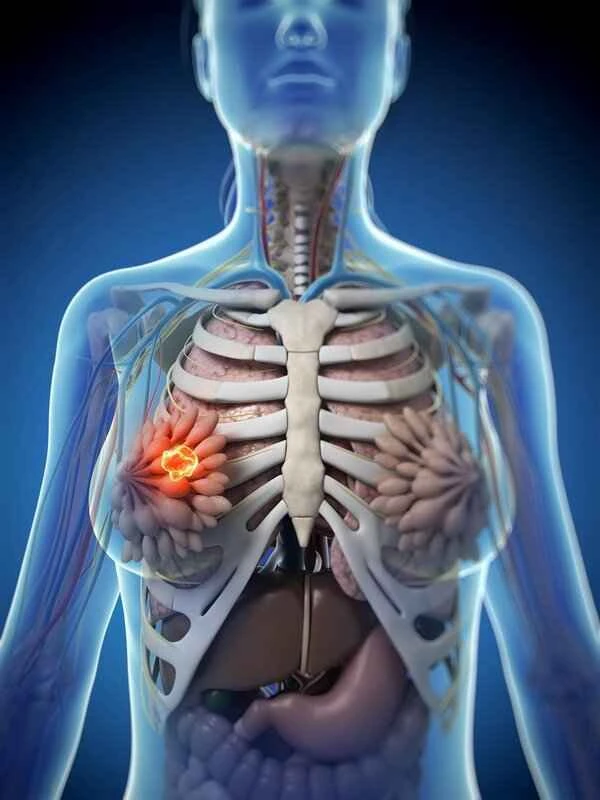
However, not all frozen eggs result in successful pregnancy. Furthermore, ovulation induction treatment has side effects, the most common being ovarian hyperstimulation syndrome (OHSS). This is an overreaction of the body to ovulation-inducing drugs, characterized by the development of multiple follicles in both ovaries, ovarian enlargement, abnormal capillary permeability, and extravasation of abnormal body fluids and proteins into the body's third space, leading to a series of clinical symptoms. The main clinical manifestations of OHSS include cystic enlargement of the ovaries, increased capillary permeability, and fluid accumulation in the interstitial spaces, causing ascites, pleural effusion, and localized or generalized edema.
In layman's terms, a normal ovary in a woman of childbearing age is generally about 4cm×3cm×1cm. However, in cases of ovarian hyperstimulation syndrome, the ovaries of some patients can enlarge to more than 10cm×10cm×10cm, with a large amount of fluid seeping into the abdominal cavity, causing the abdomen to swell up like that of an 8 or 9-month pregnant woman, making it impossible for the patient to eat normally; a large amount of pleural effusion can lead to difficulty breathing.
Ovarian hyperstimulation syndrome can further lead to complications, including vascular complications, abnormal liver function, respiratory complications, kidney complications, ovarian torsion, and ovarian rupture.
This article lists cases of ovarian hyperstimulation syndrome that I have encountered in my clinical work due to assisted reproductive technology transplantation.
Example 1
A woman in her early twenties developed severe ovarian hyperstimulation syndrome (OHSS) after egg retrieval for assisted reproductive technology. Both ovaries were 10cm in size, and she had significant ascites, requiring daily paracentesis to drain the fluid. Because OHSS patients are often hypercoagulable and prone to venous thrombosis, she was routinely given anticoagulants upon hospitalization and advised to move around frequently. Unfortunately, she suffered a stroke. Although subsequent treatment saved her life and her symptoms improved, she ultimately did not fully recover.
Example 2
In the evening, the emergency room admitted a patient, around 30 years old, who had successfully conceived twins after assisted reproductive technology (ART). She had experienced sudden abdominal pain that morning and, after failing to improve her condition at a local hospital, was transferred to our hospital. Ovarian hyperstimulation syndrome with ovarian reversal was suspected. Surgical exploration revealed that the torsion ovary was blackened, ischemic, and necrotic. The necrotic ovary was removed, and fortunately, the babies were delivered successfully.
Therefore, regardless of the reasons why women choose to freeze their eggs, these groups need to strike a balance between their needs and the costs involved.
Currently, domestic egg freezing institutions must have relevant licenses. They usually freeze eggs for people with tumors, those who need radiotherapy and chemotherapy, or those who need in vitro fertilization due to infertility. Women applying for egg freezing must hold a marriage certificate, a birth certificate, and an ID card; otherwise, the hospital is not allowed to perform the procedure.
Foreign countries have relatively relaxed regulations on egg freezing. SCRC Southern California Fertility Center, located near Hollywood, is one of the clinics with the highest IVF success rates in the United States, and many Chinese women have chosen to freeze their eggs there in recent years. Before 2015, SCRC Southern California Fertility Center served more than 200 Chinese clients, but since then, the number has more than doubled to over 500. From 2016 to the present, the center has served nearly 1,000 Chinese clients. In 2013, actress Xu Jinglei froze nine eggs at the center, stating that "freezing eggs is the only way to undo regrets in the world."
Some argue that allowing single women to freeze their eggs simply to postpone childbearing will negatively impact eugenics and the health of both women and offspring. It may also lead to resource waste, encourage the buying and selling of eggs, and even promote illegal activities like surrogacy. However, it's undeniable that prohibiting single women from using egg freezing to avoid these "side effects" also infringes on their reproductive rights. Therefore, whether a complete ban is truly necessary remains debatable.
The above content is exclusively authorized for use only and may not be reproduced without the copyright holder's authorization.