A recent 13-year cohort study of over 1.1 million Swedish children, published in JAMA NetOpen, found that children delivered by cesarean section had a 10% to 30% increased risk of neurodevelopmental disorders compared to those delivered vaginally. However, this association may also be related to family genetics.

The study included 1,179,341 children, of whom 1,048,838 were delivered vaginally, 59,514 were delivered by planned cesarean section, and 70,989 were delivered via multiparous cesarean section.
Analysis of controlled covariates (parental and neonatal characteristics, maternal comorbidities, and pregnancy complications) showed that compared with vaginal delivery, cesarean section delivery increased the risk of neurodevelopmental disorders, ADHD, intellectual disability, communication impairment, and learning disabilities in children.
To rule out potential factors such as familial genetics and environment in children with neurodevelopmental disorders, researchers further assessed the neurodevelopment of the mothers' relatives. Notably, after adjusting for potential factors, the study found a significantly weakened association between planned and intrapartum cesarean sections and outcomes. In these cases, intrapartum cesarean section was not associated with autism spectrum disorder (ASD), communication disorders, any psychosis, anxiety disorders, or depression. Planned or intrapartum cesarean section was not associated with tic disorders, obsessive-compulsive disorder, bipolar disorder, or schizophrenia.
Therefore, the overall results of this study indicate that children born via cesarean section have a 10% to 30% increased risk of being diagnosed with neurodevelopmental disorders, ADHD, and intellectual disability compared to children delivered vaginally. Children born via planned cesarean section also have an increased risk of ASD, communication difficulties, and learning disabilities. However, these associations are likely largely due to familial genetic factors. Overall, there is no causal relationship between cesarean delivery and childhood neurodevelopmental and mental illness.
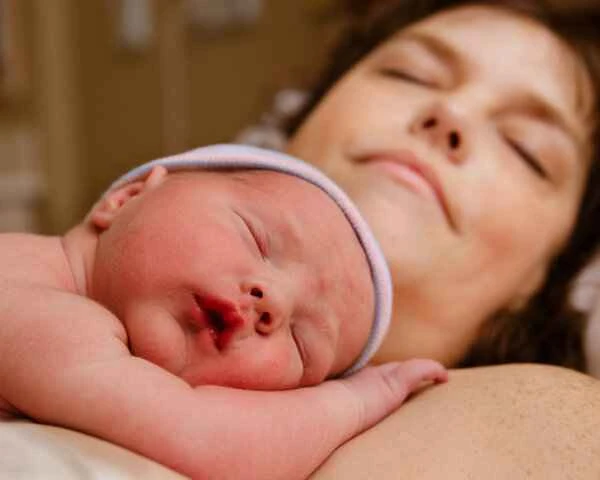
Cesarean section, as the name suggests, is a surgical procedure for delivering a baby through an incision in the abdomen and uterus. As early as 700 AD, ancient Rome had laws regulating cesarean sections. At that time, the fetus was removed from the uterus of pregnant women who died in late pregnancy before burial; this is the earliest recorded cesarean section in the world. It wasn't until 1610 that a cesarean section was performed on a living person for the first time abroad.
Until the 1870s, cesarean section techniques remained relatively rudimentary. In 1982, German obstetrician Adolf Kehrer pioneered a method of preventing uterine bleeding by suturing the incision; this low-level transverse incision is still in use today. With the advent of sterilization, handwashing, and antibiotics, the surgical outcomes of cesarean sections further improved. Subsequently, regional anesthesia, including spinal anesthesia and epidural anesthesia, was developed and became a popular method for relieving pain and improving outcomes after cesarean section.
With the development of medicine, cesarean section has become a delivery option, and the cesarean section rate has gradually increased globally. According to a big data study of 160 million data points published online in the top journal JAMA in 2020 by Liu Jianmeng's team from the School of Public Health at Peking University, titled "Trends in Cesarean Delivery Rates in China, 2008-2018," the cesarean section rate in China has decreased in some major cities, but has increased in rural areas with the highest birth rates nationwide. Meanwhile, the urban-rural gap has decreased over time.
In fact, there is a wealth of medical research on cesarean section as a mode of delivery. Last year, a large-scale prospective cohort study of 1.91 million people, published in JAMA NetOpen by Professor Jorge E. Chavarro's team at the Harvard School of Public Health, suggested that compared to vaginal delivery, children born via cesarean section have an 11% increased risk of obesity and a 46% increased risk of developing type 2 diabetes in adulthood. Even after adjusting for body mass index, the risk of developing type 2 diabetes in adulthood remained 34% higher.
It should be noted that Professor Chavarro's team's study has certain limitations. Data on indications for cesarean section is lacking, and maternal reports regarding delivery methods and other pregnancy-related information are retrospective, making them susceptible to recall bias.
Like some medical advancements, cesarean section as a medical procedure is also controversial. Some studies suggest it increases the risk of birth complications in newborns, while others point to genetic or other environmental factors as the source of the risk.
While there is usually ample advice regarding the short-term outcomes of cesarean sections, little is known about their long-term effects. Like any surgical procedure, cesarean sections carry both short-term and long-term risks, which may not become apparent until many years later, impacting the health of the mother and offspring, and even the mother's future pregnancies. In light of these controversies, Dr. Sarah J. Stock of Queen's University Edinburgh conducted a meta-analysis of the long-term risks and benefits of cesarean sections, the results of which were published in PLOS Medicine.
In this meta-analysis of nearly 30 million people, researchers defined the primary outcome for mothers as pelvic floor dysfunction, the primary outcome for infants as asthma, and the primary outcome for mothers' future pregnancies as perinatal fetal mortality.
The results showed that women who underwent cesarean sections had a 44% lower risk of urinary incontinence and a 71% lower risk of pelvic organ prolapse. However, children delivered by cesarean section were 59% more likely to become obese by age 5 and 21% more likely to develop asthma by age 12. Subsequent pregnancies were 17% more likely to result in miscarriage and 27% more likely to result in stillbirth. On the other hand, the risk of placenta previa was 74% higher.

Ten months of pregnancy culminate in childbirth. Given concerns about cesarean sections, many expectant mothers and their families advocate for vaginal delivery. However, it must be pointed out that there are many situations where a cesarean section is the only option. In hospitals, doctors do not perform surgery arbitrarily; they must adhere to the indications for cesarean section. As early as 2014, my country issued the "Expert Consensus on Cesarean Section Surgery (2014)" (hereinafter referred to as the "Consensus").
The consensus states that pathological or physiological conditions that prevent or are unsuitable for vaginal delivery are indications for cesarean section, specifically: fetal distress, cephalopelvic disproportion, scarred uterus, abnormal fetal position, placenta previa and vasa previa, twin or multiple pregnancies, umbilical cord prolapse, placental abruption, severe comorbidities and complications in the pregnant woman, and macrosomia.
In general, the mother's safety is of paramount importance during childbirth . Any situation that could affect the mother's life would require a cesarean section; similarly, situations that could affect the baby's safety would also require a cesarean section; furthermore, situations where the fetus cannot descend smoothly due to various reasons, resulting in obstructive labor, would also require a cesarean section.
Since 1985, the international medical and health community has considered a cesarean section rate of 10%–15% to be ideal. Since then, cesarean sections have become increasingly common in both developing and developed countries. When the medical indications for cesarean section are met, performing a cesarean section can effectively prevent maternal mortality, perinatal mortality, and related diseases.
In 2011, the World Health Organization (WHO) conducted a systematic review of cesarean section classification systems, concluding that the Robson classification system is the most suitable system to meet current international and regional needs. The WHO recommended developing a global cesarean section classification system based on this system.
With the development of the times, global healthcare departments have increasingly recognized the importance of respecting women's autonomy and human rights during childbirth, and cesarean section has become one of the delivery options. However, due to misunderstandings about cesarean section stemming from traditional, outdated concepts of childbirth, the decision to have a cesarean section inevitably presents a dilemma, and we often see news reports about family conflicts arising from the decision. It should be noted that although the medical community has conducted extensive research on the long-term effects of cesarean section, the specific mechanisms are still inconclusive.
In short, childbirth is by no means easy, and whether it's a vaginal delivery or a cesarean section, the safety of both mother and baby should be the primary consideration. We believe that, regardless of the method of delivery, a mother's love for her child is great and eternal.