In traditional Chinese thinking, many parents voluntarily help their children take care of their grandchildren, and many couples believe that grandparents have an obligation and responsibility to help them raise their children. However, in reality, grandparents taking care of their grandchildren is not a legal obligation.
Media reports indicate that an elderly woman in Chongqing sued her son and divorced daughter-in-law, arguing that despite their ability to raise their grandchildren, they were shirking responsibility onto her. The woman demanded compensation for childcare and received 100,000 yuan in compensation from the court.

Image source: Beijing Time
Although such cases are rare and many people feel that it is unnecessary for a family to do this, it also reflects a current situation and a question: In Chinese society, are our parents obligated to help take care of our children?
Should parents be allowed to take care of their grandchildren for free? Here's what older generations think.
Modern young people are busy with work, and some choose to have a second child after the two-child policy was implemented. However, due to soaring prices and other factors, many young families are dual-income households. If young people have to balance family and work, there will inevitably be areas they can't attend to. As a result , many people hope that their parents can help with childcare . Although not explicitly stated , some elderly people are somewhat resistant to this idea from their children.
There are basically five viewpoints among the elderly regarding helping their children raise their children:
1. Trendy
It's not that I'm unwilling to help take care of the children, but I believe that only when children raise their own children can they truly understand how difficult it is to be a parent, and it's also better for the children's growth.
2. Contradictory type
I feel like I have no freedom at all when I'm taking care of my child every day, and I'm really unwilling to accept it. I feel like I'm being held hostage by morality and emotions, but I'm too embarrassed to tell my own children.
3. Fashionable
They are unwilling to help take care of the children, believing that they have no obligation to do so, and simply want to enjoy their free retirement life.
4. Traditional type
I am very willing to take care of children, which can not only help reduce the pressure on my children, but also help me pass the boring time after retirement and enjoy the joy of family life.
5. Demand-driven
She doesn't feel tired at all from taking care of children; her only fear is that her children won't be close to her, and that they will only have a title for her when they grow up without any affection. She believes that she must take care of her children herself.
The first three types of elderly people are those who do not help their children with childcare. Their later years may be much freer, allowing them to spend more time on themselves, whether it's socializing or maintaining their health, which is very beneficial to their well-being.
When Xiao Jiu raised this question in the reader group, the aunties who usually don't like to participate in discussions all "speak out" their true feelings, which made people feel emotional after reading it.
@Retired old lady:
I'm just a live-in nanny who pays out of pocket, and I'm a bit disappointed. I'm already 60 years old, and my health isn't very good. I used to live with my son and daughter-in-law, and I not only took care of my grandson and did housework, but I also gave them my retirement pension . However, they didn't help after work, and I did everything myself. In order to get a little rest, I later decided not to live with them anymore. I help take care of my grandson during the day, and my son and daughter-in-law take the child home at night .
I have to take care of myself. I haven't had a break all day. If my health collapses, they might not be filial to me. Besides, the children are theirs, not mine.
@Aunt Liu:
We truly help without expecting anything in return. We know our children have to work and face a lot of pressure, and we can't bring ourselves to ask them for money. We never complain about everyday things like grocery shopping. Our granddaughter is our only granddaughter, and it's impossible not to help. The most important thing for a family is to be happy and harmonious. However, they still need to look after the child after work , since we can't help with her homework.
One of the mothers-in-law privately messaged Xiao Jiu, and she explained to me in a clear and organized manner:
There's no legal obligation for a mother-in-law to take care of her grandchildren , but out of kinship, she'd certainly lend a hand when her son and daughter-in-law are in trouble. Some daughters-in-law believe it's a mother-in-law's duty to take care of her grandchildren , as if she's paying off her son's debts. Take myself, for example; I not only take care of my granddaughter but also spend money on her . My daughter-in-law usually buys me a few cheap clothes as a reward, but I still want to take care of the child, solely for her sake, not for their sake, nor for their future security in their old age .
My daughter-in-law once told me, " If you help me take care of the children, I will take care of you when you get old ." But I believe that a filial daughter-in-law will be filial to you even if you do nothing for them. If your son and daughter-in-law are not filial, no matter how much you do, they will not say good things about you.
8 Harmful Parenting Habits from Grandparents – A Must-Read for Families with Grandparents Caring for Children
The topic of grandparents caring for children involves not only family relationships and responsibilities, but also the healthy physical and mental development of children. Although grandparents' intentions in caring for children are good, the problems cannot be ignored, and this must be acknowledged.
1. Dressing the child in too many clothes
Many elderly people are always afraid that their babies will catch a cold, so they keep dressing them. In fact, it's more dangerous for a baby to be too hot than too cold. Often, babies catch colds and fevers because they are dressed too warmly and sweat. When they sweat, their pores are open, and even a slight breeze can make them sick. Therefore, don't dress your child too warmly, and it's best to remove an extra layer of clothing before they exercise .
2. Overprotection can damage a child's intuition.
When a child is sitting on a stool, elderly people often place their hands behind the child to prevent them from falling. However, this disrupts the child's instincts. The child gets used to having a hand behind their back, and if that hand happens to be gone one day, the child will still lean back . If the child knew from the beginning that there was no space behind the stool, they wouldn't lean back.
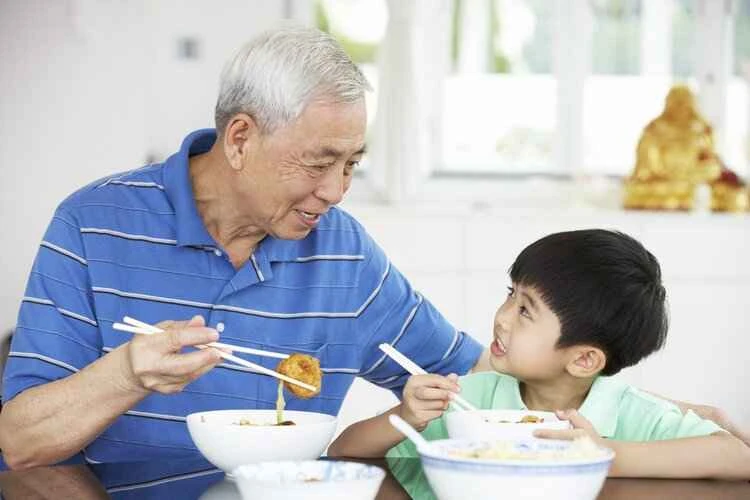
3. Not letting children chew their food properly.
Some elderly people soak food to soften it or feed it to their children by sips of water and then sips of food at a time, which is actually not good. Children normally chew their food with their teeth. During the chewing process, the food mixes with saliva and is thoroughly ground before entering the stomach. However, this behavior by the elderly means that the food enters the stomach without being chewed properly . Relying solely on gastric juices without the participation of saliva, the food becomes difficult to digest, increasing the burden on the child's digestive system.
4. It affects parents' educational authority.
Grandparents and young parents often have different educational philosophies. Some grandparents may directly criticize the parents' parenting methods, even telling the child "don't listen to your parents." This severely undermines the parents' authority and leaves the child confused, unsure of whose advice to follow. Therefore, parents should avoid directly contradicting their children's parenting styles in front of them. Even if there are differing opinions, they should communicate privately and maintain a unified approach when educating the child.
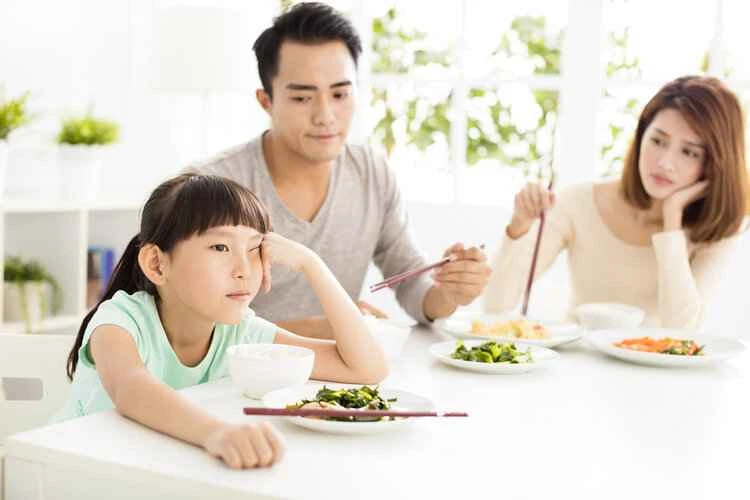
5. Treating the baby as "disabled"
Many elderly people think that children are too young and do everything for them, even walking. In fact, if you want your baby to be healthy, physical exercise is essential. You should let your child use their own two legs more, walk and run more. Not only will the child's physical fitness improve, but they will also eat better and sleep better than before.
6. Hitting or scolding children in public
Children don't want to disappoint their parents, and they quickly realize they've done something wrong. However, even if parents are disappointed, they shouldn't scold or hit their children in front of others, especially in the street. Children also have strong but fragile self-esteem. Don't hurt their self-esteem over trivial matters, or they might give up on themselves and think they're a bad child.
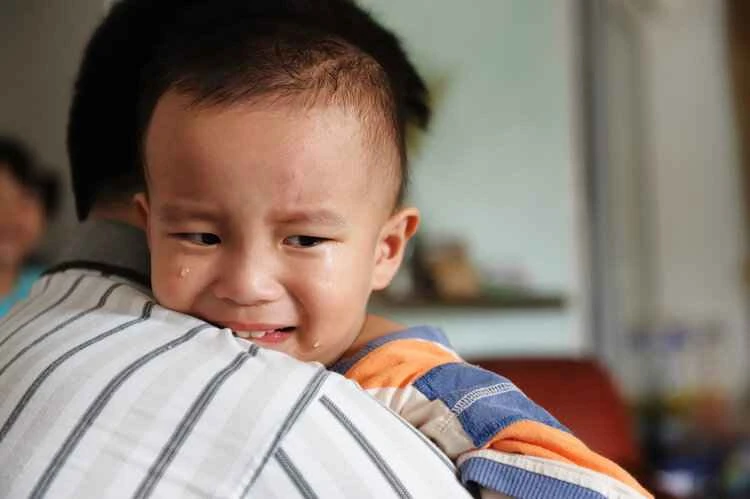
7. Always telling your child "no"
Don't always tell your child what they can't do. Too many restrictions can affect their intellectual and personality development. Adults can prepare for those things that you don't want your child to touch by putting them out of their reach.
8. Constantly feeding the child
A child's stomach also needs rest so that food can be digested properly. Don't keep feeding your child because you're worried they're not eating enough; this is actually bad for their health.
It's a favor if grandparents help with your child, and it's their right not to. Whether they help or not is their prerogative, and they shouldn't be emotionally pressured. Parents are irreplaceable in a child's development; children growing up without parental companionship will experience negative impacts on both their health and mental well-being. Even if grandparents help with childcare, the responsibility shouldn't be completely relinquished to them .
References:
[ 1 ] [Controversy] Should children be cared for by their parents free of charge? Guangdong Radio and Television Station - Today's Latest News . 2019-9-22
[ 2 ] Still expecting elderly people to babysit for free? Over 80% of netizens say they should be paid for their hard work . Shanghai Hotline . 2017-9-5
[ 3 ] Should the grandparents take care of the child after birth? Is grandparents taking care of the child a joy or a burden? ( Source: Zhiqing.com , 2019-11-13 )