Whether you're a "softie" or a "veteran," you'll always have something to say when it comes to sex.
What does your ideal sex life look like?
Do you believe that sex should come before love, or love should come before sex?
How often do you think is the most appropriate?
...
Some people have already provided answers to these questions—
This year on Qixi Festival (Chinese Valentine's Day), Tencent News and Guyu Data released the "2020 Survey Report on Sex and Love among Young People," with over 30,000 men and women participating, a 1:1 male-to-female ratio. From those born in the 1970s to those born in the 2000s, from first-time sexual experiences to long-married couples, what are their views on sex?
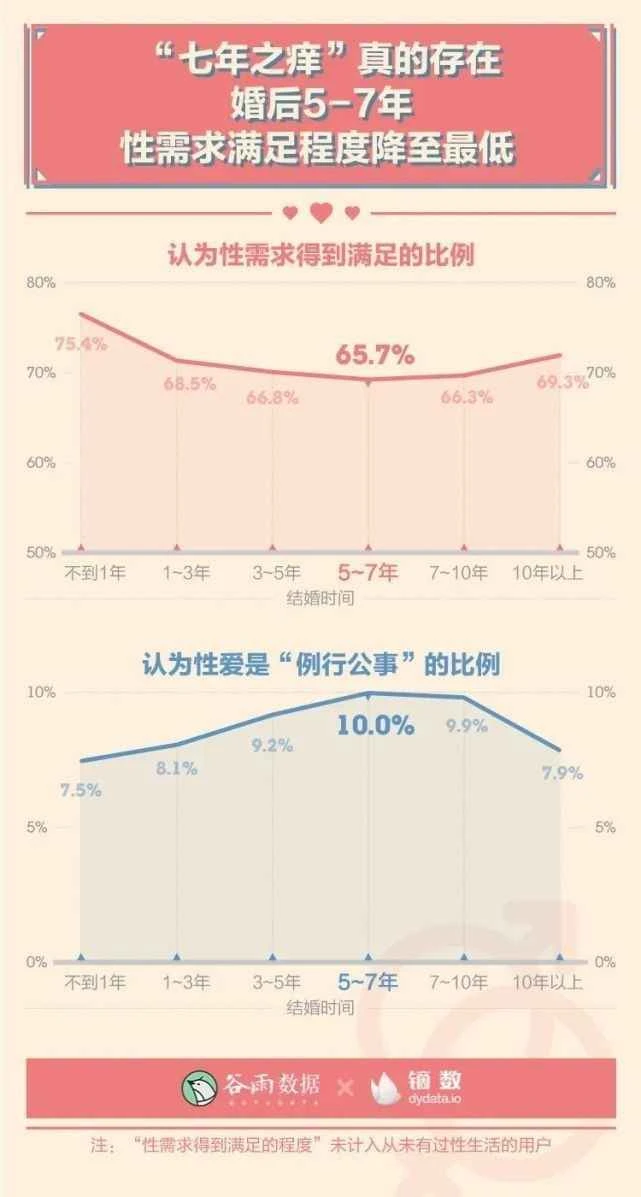
Sexual satisfaction decreases to its lowest level 5-7 years after marriage.
The saying " seven-year itch " isn't entirely without basis. Reaching the 5th to 7th year of marriage is a hurdle for many couples. Generally, during this period, both partners' needs and satisfaction drop to a new low, and many couples consider sex merely a "routine."
At this stage, only 65.7% of couples were satisfied, while 10% of couples felt that sex was just a routine, or even a perfunctory act, merely a matter of making do.
The main reasons for this situation are as follows.
On the one hand, both parties experience a certain degree of aesthetic fatigue . Whether they like it or not, people crave novelty and excitement, and as the marriage goes on, the chances of the couple finding each other disagreeable gradually increase. During this stage, the proportion of spouses having affairs or cheating is also high, and some of these affairs are simply due to a lack of feeling .
On the other hand, there's the child. Subjectively speaking, after having a child, a partner's attention will be significantly higher than their own. Objectively, with the birth of a child, the couple can no longer enjoy their time as carefree as they did before.
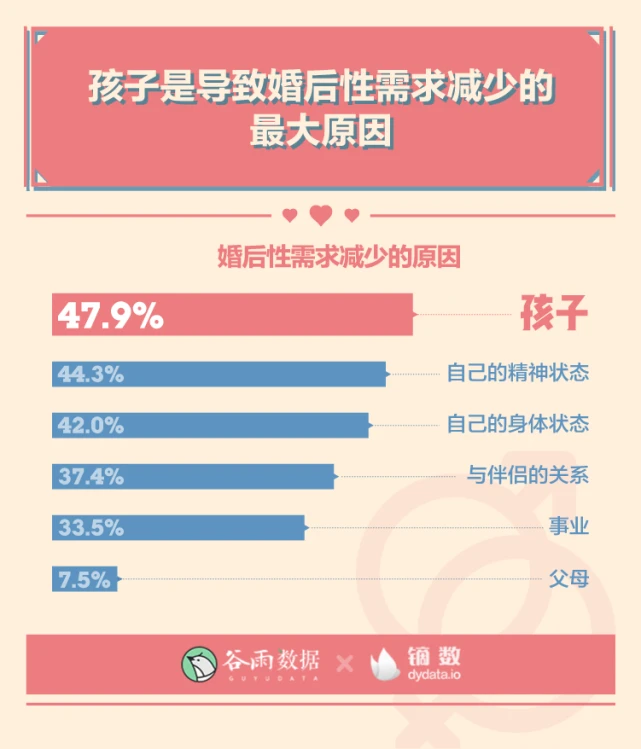
Another factor that is easily overlooked is that men's sexual ability gradually declines with age. As men age, their libido decreases, and their satisfaction naturally declines as well. From a woman's perspective, some women experience postpartum depression after childbirth, leading to a shift in their sexual desire. Some women also experience changes in their body shape after childbirth, causing their husbands to lose interest in them.
Besides, couples who have been married for 5 to 7 years usually have elderly parents to care for and young children to raise. Both husband and wife are busy making a living, so they don't have the time or energy to take care of the deep-seated needs in their hearts.
Eighty percent of those born after 2000 have had sex, and 15% have sex once a day.
Compared to the post-80s generation who have already entered middle age, the post-00s generation, who are just turning twenty, are not only experiencing the beauty of love, but also enjoying happiness.
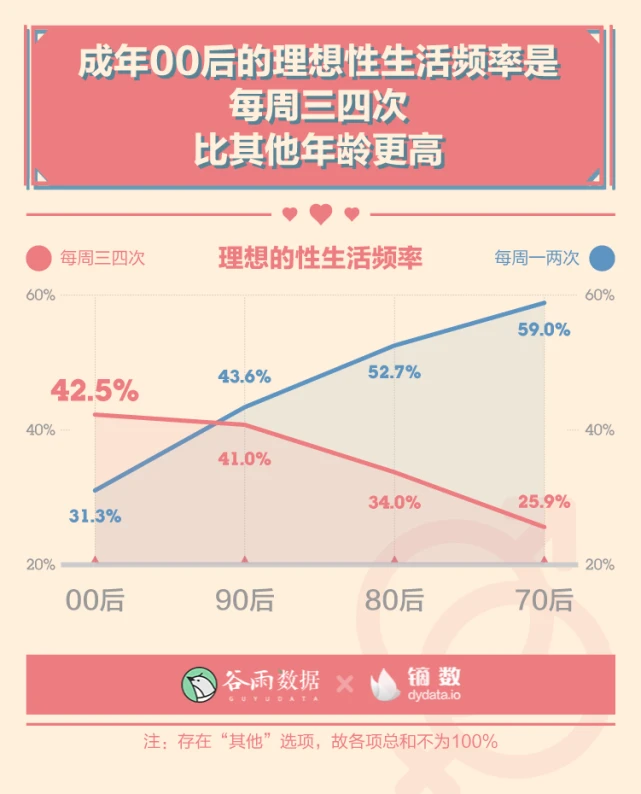
Data shows that over 80% of those born in the 2000s have had sexual intercourse, with 15% even having sex once a day; more than 40% of those born in the 2000s believe that the ideal frequency is three or four times a week, a higher percentage than other age groups.
After all, youth is their greatest asset. While abundant energy is secondary, more importantly, compared to other age groups, those born in the 2000s live in an era of material abundance and diverse values , which creates superior conditions and opportunities for them.
In addition, young people do not have to struggle for a living and have no pressure in life, so their love and sex life can simply follow their own wishes, which is something that people of other ages "envy".
In an era of diversified values, while there are more choices, there are also more risks. Most of those born in the 2000s are still students, which means that when they first experience sexual activity, they not only have to pay attention to their physical health, but also avoid pregnancy—their age and social status make it difficult for them to cope with the possibility of "unplanned pregnancy ."
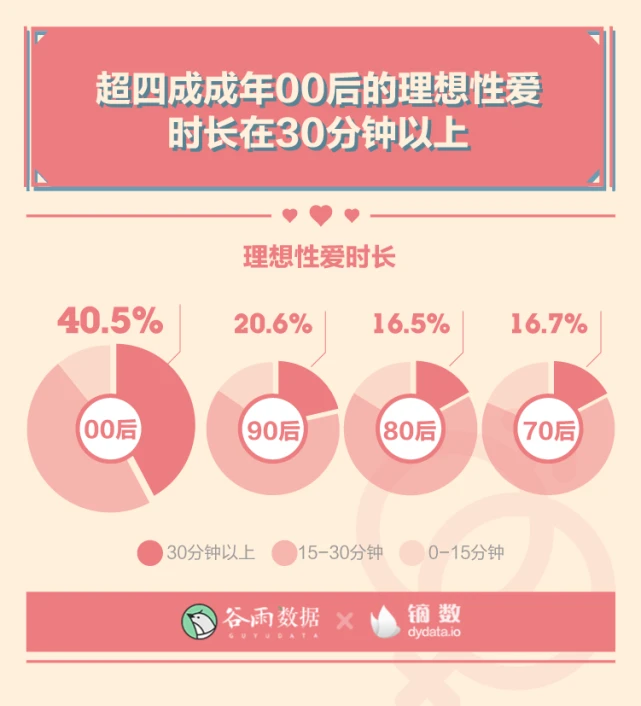
Regarding duration, people generally believe that the longer the better, especially men. In reality, neither partner needs to deliberately pursue a longer duration; moderation is sufficient, unless the man has a medical condition, in which case he should seek help from a professional doctor.
The top spot on the frequency rankings is unexpected.
In terms of frequency, Guizhou has ranked first for two consecutive years! In 2019, 56.1% of Guizhou residents had sex every week. Although this year it has decreased, the proportion has still reached 23.5%. This is not surprising, as economic studies have long shown that the more economically developed a region is, the lower its frequency and satisfaction level.
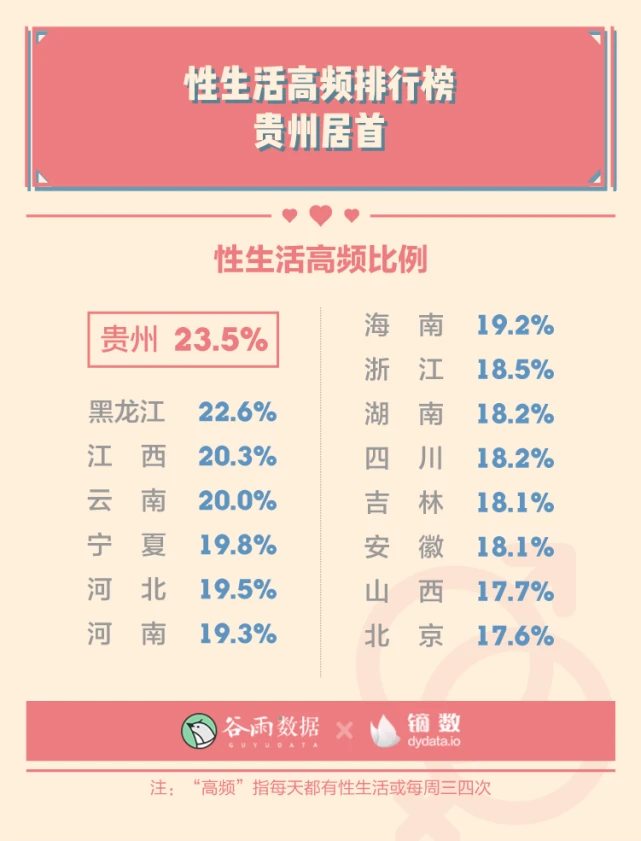
From a social perspective, while economically developed regions enjoy abundant material resources, adults face immense daily work and life pressures, leading to a fast pace of life and consequently, inconsistent frequency and satisfaction. Conversely, in relatively underdeveloped areas, the slower pace of life and generally lower stress levels create more opportunities and possibilities for couples.
Of course, this is not absolute. Economic factors are only one aspect affecting frequency. People's lifestyles, cultural values, and attitudes toward sex in different regions also have an impact.
Therefore, it is not objective to use a standard value to demand that everyone, because such things vary from person to person.
Excessive frequency of intercourse, from a male perspective, is tantamount to neglecting your prostate health. Repeated and excessive congestion of the prostate can lead to prostatitis and other problems. For women, the same issues can arise. Due to their unique physiological structure, women are more susceptible to bacterial invasion when their immunity is weakened, potentially leading to various gynecological diseases.

Sexual activity is inherently a very subjective experience. As people age, social factors also influence their feelings and perceptions. For each individual, as long as their needs are met and there are no safety issues, that's sufficient.
References:
[1] "A Survey on the Sexual Life of Chinese People". Southern Weekend. December 6, 2002.
[2] “After Wang Quan’an’s prostitution, let’s look at the survey report on the sex lives of 1 million Chinese people.” Observer. 2014.9.16
[3] Global Sexual Well-being Survey: High Frequency of Sexual Activity but Low Satisfaction in China. China.org.cn. 2012.2.25
[4] "What is the real state of sex and love among young people? The answers from over 30,000 people are here." Guyu Data. August 24, 2020.