As the saying goes, "Husbands and wives are like birds in the same forest; when disaster strikes, they fly away separately." In an era with a high incidence of cancer, countless couples have been torn apart because of cancer.
01 The wife is undergoing active treatment for cancer, but the husband complains that the medicine is too expensive.
Ms. Xiao had experienced an unhappy marriage, but her naturally optimistic nature prevented her from being defeated. After emerging from the shadow of her previous marriage, Ms. Xiao and Mr. Wu registered their marriage seven years ago. Their married life was very sweet, and soon their son was born. After their son's birth, Mr. Wu's financial burden increased considerably. After careful consideration, he took out a loan to buy two trucks for a transportation business, while Ms. Xiao took care of the household chores.
Unexpected events can happen at any time. The couple, who were living a peaceful life, encountered a sudden change.
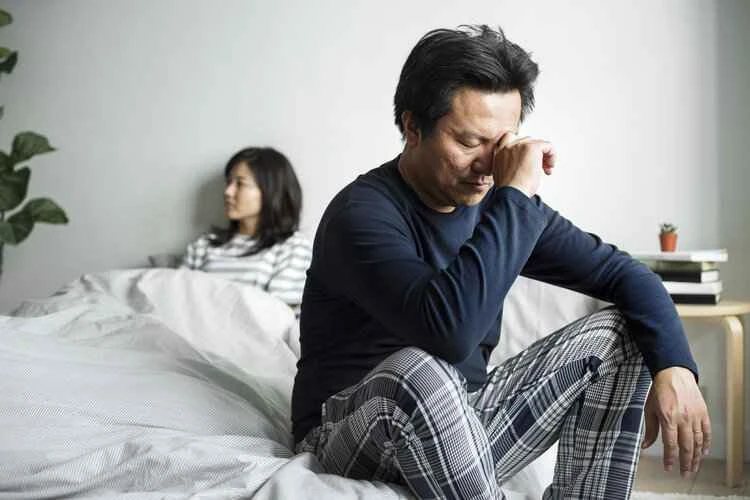
In 2017, Ms. Xiao suddenly developed a fever and cough . She initially thought it was a minor illness, but the medication didn't help. After her husband accompanied her to the hospital for a checkup, they learned that his wife had lung cancer . The young couple struggled to accept the reality. After days and nights of agonizing suffering, Ms. Xiao finally decided: she had to live, no matter what! Thus, Ms. Xiao traveled to major cities like Beijing, Shanghai, and Guangzhou seeking medical treatment, spending almost all of her pre-marital savings .
Later, on the doctor's advice, Ms. Xiao began taking the targeted drug crizotinib . Although crizotinib was expensive and Ms. Xiao experienced severe side effects after taking it, she had to borrow money from all sides to pay for her treatment in order to stay alive, borrowing nearly 600,000 yuan from relatives and friends in total .
At first, Mr. Wu would go to the hospital to take care of his wife, but as time went on, he gradually felt powerless. Mr. Wu and Ms. Xiao and her family had major disagreements on the treatment plan.
02. A couple went to court over medical expenses, and the court ruled in their favor.
Mr. Wu believes that his wife 's illness has no end in sight, and no matter how expensive the medicine or treatment, it will be futile . Moreover, the family already has a large debt, and as a husband, he has done everything he can. Ms. Xiao's family cursed Mr. Wu as a "heartless man." Watching Ms. Xiao struggle against the virus, tears welled in their eyes, and they could only do everything they could to support her fight on.
Because her husband was unwilling to continue paying for Ms. Xiao's medical expenses, she had no choice but to sue him in court, demanding that Mr. Wu pay 300,000 yuan for medical expenses and other costs .
After hearing the case, the court held that mutual support between spouses is a legal obligation stipulated in China's current Marriage Law. As Ms. Xiao's legal husband, Mr. Wu's primary responsibility should have been to save her life, and he should have supported her in taking targeted drugs with specific therapeutic effects to sustain her life .
Ultimately, the court ruled that Mr. Wu should pay Ms. Xiao a total of 300,000 yuan for her subsequent treatment .
Sometimes, it only takes one illness to break a family.
Last year, a 48-year-old man in Henan suffering from coronary heart disease committed suicide because he couldn't afford the 100,000 yuan surgery fee, a tragic story that evoked widespread sorrow. For people from well-off families, 100,000 yuan is nothing; it might not even buy a decent car. However, for those from poorer families, 100,000 yuan could be a life-saving sum.
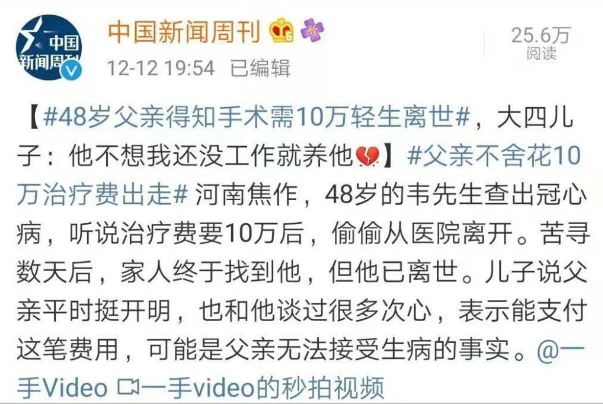
Sometimes, all it takes to break a family is an illness.
"Expensive and difficult access to medical care" is a deeply rooted social problem in my country. Objectively, it is mainly related to socio-economic transformation, population aging, changes in disease patterns, increased public awareness of healthcare, allocation of healthcare resources, and accelerated drug updates. Subjectively, it is mainly related to insufficient government financial support, hospitals facing survival pressures, disorderly market competition, and adjustments to medical service prices.
One problem is the high cost of ICU care , and another is the high cost of anti-cancer drugs .
ICU costs are high, primarily due to the expense of equipment and testing . Each ICU bed requires a ventilator, ECG monitor, oxygen system, infusion pump, and a central monitoring system to oversee the entire process, as well as various bedside diagnostic equipment. Furthermore, equipment maintenance costs are substantial. Patients admitted to the ICU are in extremely critical condition, facing imminent death, thus requiring comprehensive and timely monitoring and examinations involving numerous indicators, resulting in high testing costs.
The high cost of anti-cancer drugs is largely due to the costs incurred during the research and development process . Currently, China's research capabilities in anti-cancer drugs are still limited, and many drugs still need to be imported. After passing through multiple layers of tariffs, these anti-cancer drugs are often prohibitively expensive by the time they reach the general public. Furthermore, the rising cancer incidence rate each year, coupled with an oversupply of anti-cancer drugs, further increases the cost. Therefore, anti-cancer drugs are often referred to as "sky-high priced drugs" or "life-saving drugs."
Some people say, "Isn't there medical insurance?" Currently, due to various factors, ICU costs are not covered by medical insurance, and most anti-cancer drugs are also not covered by medical insurance. Therefore, ordinary people still have to pay out of their own pockets, which puts a lot of financial pressure on them.
Fortunately, 17 anti-cancer drugs have been included in medical insurance.
The good news is that with the implementation of medical and pharmaceutical reforms, more and more anti-cancer drugs are being included in the reimbursement scope, providing timely assistance to patients . It is reported that last year, through a series of reforms, the National Healthcare Security Administration established over 15,000 designated medical institutions for cross-provincial medical treatment , and included 17 anti-cancer drugs in the medical insurance catalog.
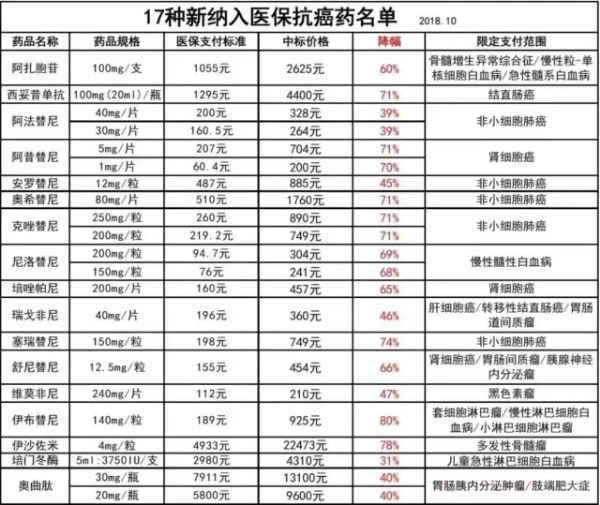
Image source: Internet
Data shows that after 17 anti-cancer drugs were included in the medical insurance catalog, a total of 44,600 people received reimbursements , amounting to 256 million yuan. The cost burden after medical insurance reimbursement was reduced by more than 75% compared to last year .
With advancements in research and development and the progress of medical reforms, the problems of "expensive and difficult access to medical care" will be greatly alleviated. It is hoped that by then, access to anti-cancer drugs will no longer be a luxury for patients from economically disadvantaged families.
References:
[1] "Husband Complains About Expensive Drugs for Wife's Cancer Diagnosis: No Matter How Expensive the Drugs Are, They Can't Guarantee How Long She Can Live . " Dayoo.com . 2019-09-04
[2] "17 Anti-cancer Drugs Available for Medical Insurance Reimbursement Starting November 15, Prescription Costs to be Reduced by Up to 80% (List of Drugs)". Beijing Daily. 2018-11-14
[3] " 17 Anti-cancer Drugs Included in Medical Insurance, Reducing Patients' Drug Cost Burden by More Than 75% " . CNR.cn. 2019-02-07