Menstruation is probably every woman's "closest friend." From puberty onwards, menstruation occurs monthly until menopause. Menopause refers to the decline in a woman's ovarian function and the cessation of menstruation. Generally, true menopause is defined as a continuous cessation of menstruation for one year.
So, what is the normal age for menopause? What harm does premature or late menopause cause to the body? Can premature menopause be artificially delayed?

Please ask Dr. Li Ye, Chief Physician of the Department of Gynecology at Beijing Hospital, to answer your questions.
Pay attention to the age of menopause and specific circumstances.
According to Li Ye, the timing of menopause varies across regions due to differences in climate and other factors, but the general range is between 40 and 55 years old. "Menopause within this period is considered normal and not abnormal." However, menopause occurring earlier than 40 or later than 55 is considered abnormal and requires a medical check-up.
Meanwhile, Li Ye also reminded women to pay close attention to the specific circumstances of their amenorrhea, namely whether they have stopped menstruating for 12 consecutive months. "I just performed a dilation and curettage (D&C) procedure on a patient who was 58 years old. Her menstruation had been irregular since she was a little over 50, with light and continuous bleeding. This means she had not truly stopped menstruating. This patient did not take it seriously until she realized she needed to get checked, at which point she was diagnosed with endometrial cancer."

Be wary of premature and late menopause.
For women who experience menopause before the age of 40, the aging process accelerates, and they may also develop other diseases, such as osteoporosis, atrophy of the reproductive organ mucosa, cardiovascular problems, and even difficulty in sexual intercourse.
With industrialization, life expectancy has increased significantly, and many 40-year-old women still look young. Therefore, for some women who experience menopause around 41 or 42, this age is considered early, and they hope to delay menopause through various methods. Li Ye stated that if there are no uncomfortable symptoms, artificial intervention to postpone menopause is generally not recommended. Regarding the various folk remedies for delaying menstruation available on the market, Li Ye believes they are not very effective. "If a patient is truly uncomfortable, such as experiencing menopausal symptoms like hot flashes, sweating, irritability, or even arguing with colleagues, we can use some hormonal medications to help postpone menopause by a few years."
However, these hormonal drugs may cause cancer, trigger breast cancer, and lead to blood clots, for example, if there is a family history of cancer and the patient also has breast hyperplasia, it is very dangerous. "Using medication to delay cancer has both advantages and disadvantages, and there are some potential risks. You must consult a specialist."
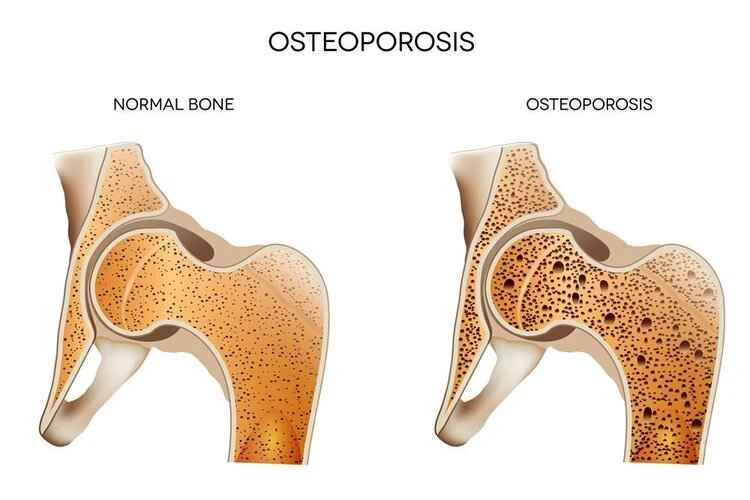
It's worth noting that Li Ye also reminded women who experienced early menopause (within the normal range), and who frequently sit in offices and experience lower back pain and bone pain, to have their bone density checked. "If their bone density is below standard, it's necessary to check for osteoporosis. If they experience decreased bone density, bone pain, muscle spasms, or even develop osteoporosis, they need timely hormone replacement therapy, including estrogen and progesterone. It's strongly recommended that they consult a specialist." It turns out that women with osteoporosis have a high fracture rate. For middle-aged and elderly people, while the first fracture may not be a major problem, a second fracture can drastically reduce life expectancy.
As for women who have gone through menopause after the age of 55, the situation may be even worse. "Some women may have problems with their endometrium at 56 or even 60, such as cancer or high hormone levels. It is recommended that they get checked," Li Ye said.