Menstruation is a special time for women, and many things need to be temporarily stopped during those days, such as strenuous exercise and blood donation.
Xiao Jiu guesses some people might say that you can't wash your hair or take a shower during your period. Well, we've explained this many times already: paying attention to hygiene during your period is crucial. As long as you keep warm, washing your hair and taking a shower are not forbidden!
Some friends also asked whether they should avoid having a gynecological ultrasound during their menstrual period. This is a more professional question, so Xiao Jiu consulted Zhi Mingchun, an ultrasound physician and associate chief physician in the Department of Obstetrics and Gynecology at Beijing Hospital, to answer it for everyone.

(Interviewed expert: Zhi Mingchun, Ultrasound Physician and Associate Chief Physician of the Department of Obstetrics and Gynecology, Beijing Hospital . He holds a master's degree and has been engaged in clinical work in obstetrics and gynecology for 10 years. Afterwards, he specialized in gynecological and obstetric ultrasound for more than 12 years, accumulating rich clinical experience and insights.)
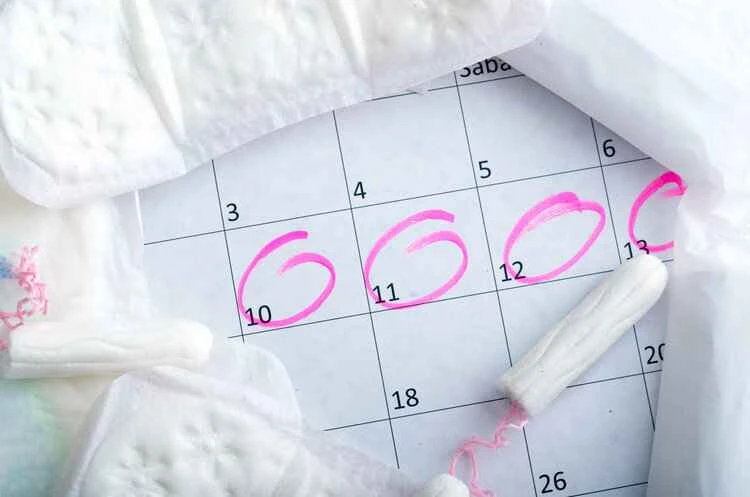
Most of the time, ultrasound examinations should be avoided during menstruation!
Ultrasound in the diagnosis of gynecological diseases mainly includes two types: abdominal ultrasound and transvaginal ultrasound.
To achieve higher accuracy and minimize the drawbacks, doctors need to combine transabdominal and transvaginal ultrasound during examinations: Because transvaginal ultrasound has high resolution, it inevitably reduces the detection depth. For larger uterine fibroids, large pelvic masses, or masses with long pedicles and high positions, it cannot display the full picture, requiring combined transabdominal and transvaginal scanning; surgery can cause uterine adhesions and cervical elongation, and because the uterus is in a high position, transvaginal ultrasound is also difficult to display, requiring transabdominal ultrasound to help with accurate diagnosis.
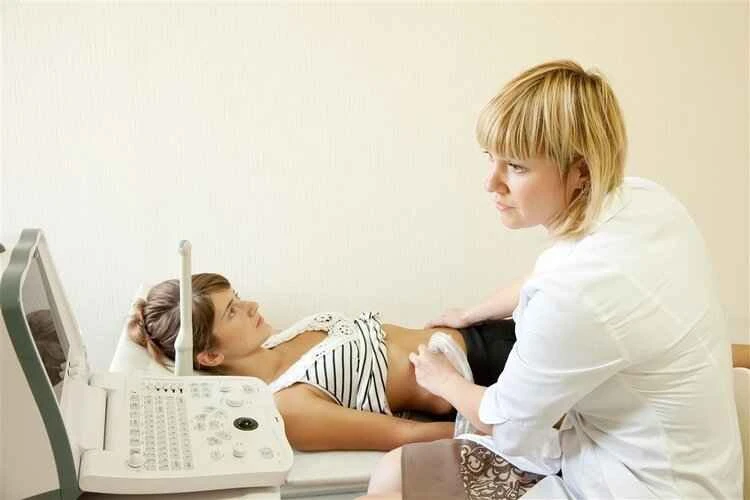
Transvaginal ultrasound also has certain limitations, such as being contraindicated for those who have never had sexual intercourse; it should be used with caution in cases of acute vaginitis and pelvic inflammatory disease; and it is not suitable for vaginal malformations (vaginal atresia, thick transverse septum, or oblique septum).
Most of the time, ultrasound examinations should be avoided during menstruation. However, there is one exception: when observing the thickness of the endometrium at different stages of the menstrual cycle, an ultrasound must be performed during menstruation for the results to be more clinically meaningful.
An ultrasound can be performed during menstruation to check the thickness of the uterine lining!
A woman's endometrium undergoes a cyclical change. The endometrium sheds during menstruation, is thinnest after menstruation ends, and is thickest just before or when menstruation begins.
If a young woman has irregular periods or light periods, the doctor needs to check the thickness of her endometrium at the onset of her period to see if it's thick enough when it should be at its thickest. Don't be surprised if your gynecologist asks you to come to the hospital for an ultrasound as soon as you start bleeding!

Generally, a woman's menstrual period lasts 3 to 7 days. Some women may not have completely stopped menstruating by the sixth or seventh day. At this time, an ultrasound can be performed to check the actual thickness of the endometrium when it should be at its thinnest and to determine if there are any polyps in the uterine cavity.
In addition, if a doctor suspects that a patient's menstrual flow is irregular and not clean enough, and suspects that it may be a uterine polyp, the ultrasound should be performed when the period has just ended or is not quite over yet. At this time, the endometrium is the thinnest and does not cover the polyp, so the ultrasound doctor can have a clearer understanding of the polyp.
Of course, every patient's situation is different, and there are many things to check for in gynecological diseases. It is best to consult a professional doctor in advance about when to have an ultrasound examination and whether to avoid the menstrual period!
The above content is exclusively authorized for use only and may not be reproduced without the copyright holder's authorization.