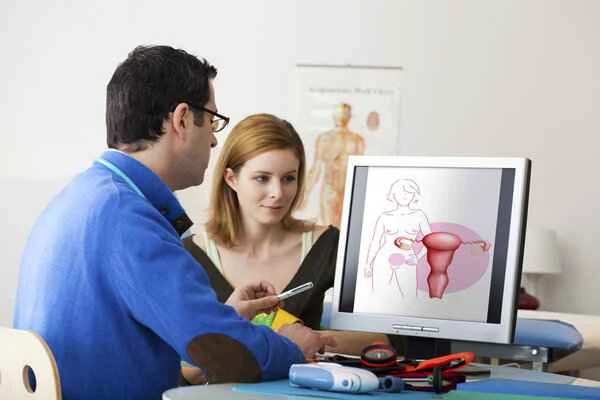
Most women are too embarrassed to talk about gynecological problems, or they simply endure them. This stems from a lack of sex education and neglect of women's health. If gynecological problems are not taken seriously, they can easily lead to more serious issues.
1. Is vaginal douching necessary?
A: It is necessary to clean the vulva every day, especially during menstruation. Use warm water to clean the vulva properly to prevent external pathogens from entering the vagina.
Avoid douching unless absolutely necessary, and do not use gynecological washes. Maintain the natural defenses of the female reproductive tract and do not disrupt the vaginal pH balance.
You need to use your own dedicated washing basin and towel. Wash the washing utensils before use, and dry the towel in the sun or in a ventilated place after use. It is best to expose it to the sun to help kill bacteria and disinfect it.
2. Is irregular menstruation caused by endocrine imbalance? What are the standards for normal female endocrine function?
A: Sex hormone levels are influenced by the hypothalamus, pituitary gland, and ovaries. The hypothalamus is the "supreme command center," releasing a certain amount of hormones to issue instructions to its subordinate glands (the pituitary gland). The pituitary gland also sends signals to regulate its subordinate glands.
For the ovaries, these signals are follicle-stimulating hormone (FSH) and luteinizing hormone (LH) secreted by the pituitary gland, and prolactin is also produced during lactation. These hormones act on various organs, producing corresponding changes.
If these regulatory mechanisms malfunction, a series of symptoms will occur, known as endocrine disorders. Regular menstruation only indicates that some of these regulatory mechanisms are functioning normally, and does not mean that there is no endocrine disorder.
Generally, signs of normal female endocrine function include: normal menstrual cycle and flow, normal body hair and weight, smooth skin without obvious dark spots, normal breasts, ability to conceive normally, and a stable personality, etc.
3. What exactly causes the "fishy" smell in the private parts?
A: Many women are often troubled by a suspicious "fishy" smell, which they think is unique to them and makes them feel uncomfortable.
Actually, if you consult an OB-GYN, you'll know that this odor is usually a symptom of bacterial vaginosis. Vaginal infections are the most common gynecological problem among young women, and in most cases, without serious complications or infection, they can clear themselves.
If the problem is serious, it is necessary to go to the hospital for treatment, especially for pregnant women, whose vaginal health is particularly important.
4. Some people say that semen can moisturize the vagina and is good for women's health. Is this true?
A: While there is no comprehensive and authoritative confirmation yet that semen can promote women's health, many experts and scholars have pointed out after research that semen does have certain health benefits for women, such as antibacterial and anti-inflammatory properties.
In addition, it may have a positive effect on the hormonal balance in women, which can reduce the risk of cancer.
In addition, semen can promote the secretion of female sex hormones, making breasts fuller, hips more plump, and skin smoother; it can also moisturize the vagina, improve the quality of sexual life, enhance sexual psychological satisfaction, and help exert the health benefits of sex.
5. Many women say that stress can lead to pelvic inflammatory disease, is that true? How can pelvic inflammatory disease be prevented?
A: High stress does not directly cause pelvic inflammatory disease, but high stress, lack of exercise, and prolonged sitting can cause poor blood flow in the pelvic cavity, leading to chronic pelvic congestion. Combined with a weakened immune system and bacterial infection, this can result in chronic pelvic inflammatory disease.
To prevent pelvic inflammatory disease, pay attention to the following aspects:
(1) Pay attention to hygiene during sexual activity and menstruation, and keep the perineum clean and dry;
(2) Sexual activity must be prohibited after abortion or IUD insertion/removal. Swimming, tub baths, and saunas are also prohibited because the body's resistance is lowered at this time, making it easier for pathogens to enter and cause infection.
(3) Practice contraception to minimize the trauma of induced abortion;
(4) Strengthen exercise, improve physical fitness, combine work and rest, and enhance the body's resistance to disease.
6. How can ordinary women prevent cervical cancer?
A: The prevention of cervical cancer mainly involves the following aspects:
(1) Pay attention to late marriage and late childbirth;
(2) Pay attention to sexual hygiene and menstrual hygiene, and treat cervicitis promptly;
(3) Have regular gynecological examinations. Women over 35 years of age should have a cancer screening once a year.
7. Are there any side effects from using vaginal lubricants?
A: Under normal circumstances, vaginal lubricants are not needed. They can be used in special cases when vaginal secretions are low. Vaginal lubricants include pure lubricants, astringent lubricants, silicone lubricants, etc., and generally have no side effects.
8. What is HPV infection? Under what circumstances should one be alert?
A: HPV is the human papillomavirus. Infection with HPV can cause epithelial hyperplasia, forming papillary lesions known as genital warts.
HPV infection of the reproductive tract is a long-term process, and the virus can remain dormant within cells for years. Once the body's immunity decreases, the dormant virus can become active again. HPV is widespread in nature; some people are susceptible to this virus, while others are not.
Women who start having sex too early, have multiple sexual partners, use birth control pills too early or for a long time, or smoke and drink alcohol should be wary of the possibility of HPV infection.
Expert: Hu Hongxia
The above content is exclusively authorized for use only and may not be reproduced without the copyright holder's authorization.